Let’s gather some sparkle and make your home merry and bright, without the heartbreak of a droopy branch. If you decorate with heirloom glass, chunky keepsakes, or big ribbon bows, the “best” Christmas tree is the one with the strongest branch structure for your ornament style.
This guide compares popular real fir and pine species with artificial PVC and PE trees, then shares practical tricks for keeping heavy ornaments stable all season.
What matters most for heavy ornaments
Before picking real or artificial, it helps to know what actually prevents sagging. Branch strength is not just “stiffness.” It is a mix of structure and how you decorate.
- Branch stiffness and thickness: Thicker, woodier branches resist bending. On artificial trees, thicker wire and stronger hinges matter most.
- Branch density: More branches give you more places to “share the load” so one spot is not carrying everything.
- Needle type and grip: Stiffer needles can cradle ornament hooks and keep pieces from sliding inward.
- Tree taper and spacing: Wide open gaps make it harder to tuck ornaments close to the trunk where support is strongest.
- Trunk and stand stability: A wobbly base makes heavy ornaments feel heavier because the whole tree shifts.
Quick verdict: which usually holds heavy ornaments better?
Best overall for heavy ornaments: A high quality artificial tree with PE tips and a sturdy mixed branch build (strong interior branches, realistic outer tips) often wins for pure load bearing. Many are designed with thicker gauge wire and dense branching.
Best real tree picks for heavy ornaments: Fraser fir and noble fir are top favorites for strong branches, plus good needle hold.
Most likely to droop under heavy decor: Softer needled or more flexible real trees (often some spruces and certain pines) and budget artificial trees with thin wire branches.
Real trees: fir and pine branch strength compared
Real trees vary a lot. Two trees of the same species can still feel different depending on growing conditions, freshness, and how heavily they were handled in transport. Still, these tendencies are reliable enough to guide your choice.
Fraser fir
Branch strength: Strong, with good “spring back.”
Why decorators love it: Fraser fir branches are usually sturdy enough for heavier ornaments, and the needles tend to hold well. It also has a naturally full shape that helps you distribute weight.
Best for: Heirloom glass ornaments, medium to heavy collections, and layered decorating.
Noble fir
Branch strength: Very strong and supportive.
Why it shines: Noble fir is often considered one of the strongest real tree options for ornaments. Branches are typically thick and nicely spaced for hanging.
Best for: Larger ornaments and heavier statement pieces.
Douglas fir
Branch strength: Moderate.
What to expect: It can handle a classic ornament mix, but very heavy items may need to be placed closer to the trunk or supported with wire.
Best for: Mostly lightweight to medium ornaments, with a few heavier accents placed thoughtfully.
Balsam fir
Branch strength: Moderate to strong, depending on the tree.
Decorating notes: Often a good all-arounder. For heavy ornaments, treat it like a Fraser fir’s slightly softer cousin: place the heaviest pieces on the stoutest branches.
White pine
Branch strength: More flexible, less supportive for heavy items.
Decorating notes: White pine is wonderfully soft and full, but the branches can bend under weight. If your ornaments are heavy, you will likely need support tricks.
Best for: Lightweight ornaments, garlands, and ribbon that can be draped and tied rather than hung.
Scots pine
Branch strength: Often fairly sturdy.
Decorating notes: Scots pine can be a solid choice for heavier ornaments compared to softer pines, though branch quality varies.
Best for: A mixed ornament collection including some heavier pieces.
Artificial trees: PVC vs PE for heavy ornaments
Artificial trees have one big advantage: engineering. When the frame is well-built, it can reliably support heavier decor year after year.
PVC artificial trees
How they are made: Flat PVC needles attached to branches, often fluffy and full looking.
Ornament holding power: Depends mostly on the wire gauge and branch construction. Some budget PVC trees use thinner wire that bends under heavy ornaments.
Best use: Great if you choose a higher quality model with stiff branches and plenty of tips. They can be excellent for heavy ornaments, but quality varies widely.
PE artificial trees
How they are made: Molded PE needles look more realistic and often sit on a sturdier branch structure, especially in mid to premium models.
Ornament holding power: Often strong, especially when PE tips are paired with robust inner PVC fill and thick interior branches.
Best use: A strong choice for heirloom ornaments when the tree includes thick, well-anchored branches near the trunk.
Mixed PE and PVC trees
Sweet spot: Many of the best “heavy ornament” artificial trees are mixed construction. They combine realism at the tips with dense, supportive inner branches.
What to look for: Branches that feel firm near the trunk, hinges that do not wobble, and plenty of secondary branchlets to spread out weight.
How to spot a strong tree in 60 seconds
Whether you are choosing a real tree lot-side or fluffing an artificial one at home, these quick checks help you predict sag.
For real trees
- Press test: Gently press a branch down and release. Stronger branches spring back rather than staying drooped.
- Look for woodiness: Thicker branch stems near the trunk usually mean better support.
- Check for dryness: A drying tree loses needle grip and flexibility in the wrong way. Fresher trees behave better and hold hooks more securely.
- Pick the right shape: A full tree with layered branches gives you more support points for weight distribution.
For artificial trees
- Feel the branch wire: If it bends easily with light pressure, heavy ornaments will pull it down.
- Check hinge stability: Wobbly hinges or loose connections can droop as soon as weight is added.
- Count the structure, not just the fluff: Lots of tips are great, but you also want sturdy primary branches that can carry weight.
- Look for an interior “backbone”: Stronger trees have a solid center pole and robust branch attachment points.
Decorating tricks that prevent branch droop
Even a strong tree can struggle if all the heaviest ornaments land at the outer tips. These little squirrel-approved tricks keep things perky.
1) Hang heavy ornaments closer to the trunk
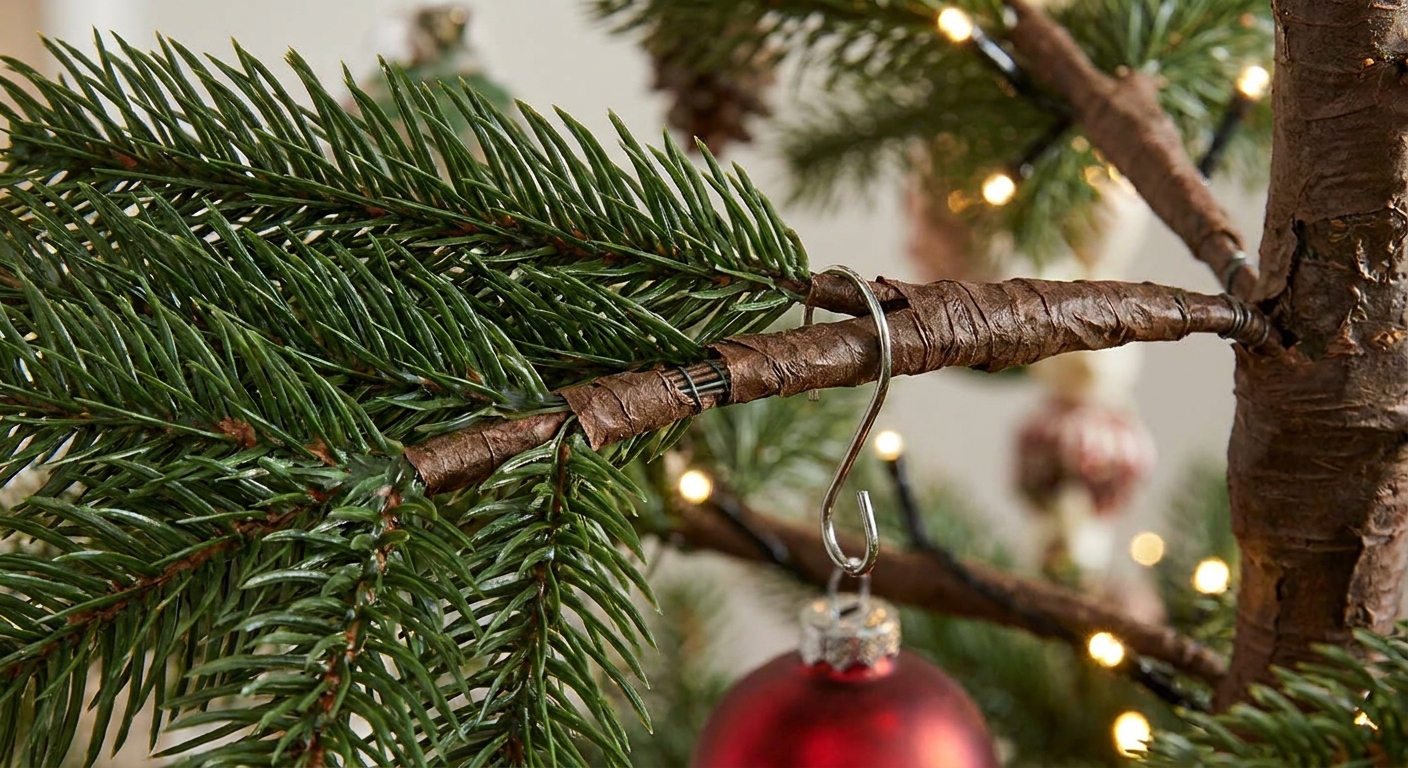
The strongest part of any branch is near the trunk. Slide heavier pieces inward, and use lighter ornaments at the ends for sparkle without strain.
2) Distribute weight like you are “balancing a nest”
Avoid clustering heavy ornaments on one side or one band of the tree. Spread them around the tree, and stagger heights so no one area is overloaded.
3) Use ornament wire for sneaky support
If an heirloom ornament is heavy, swap a thin hook for green floral wire or ornament wire. You can loop it around the branch closer to the trunk and make a secure hanger that does not slide.
4) Anchor extra-heavy pieces to two branches
For very heavy ornaments, use wire to share the load between two nearby branches. This reduces droop and helps prevent a tumble.
5) Choose ribbon methods that do not tug
Big bows and thick ribbon can be surprisingly heavy. Instead of hanging one giant bow from a tip, try:
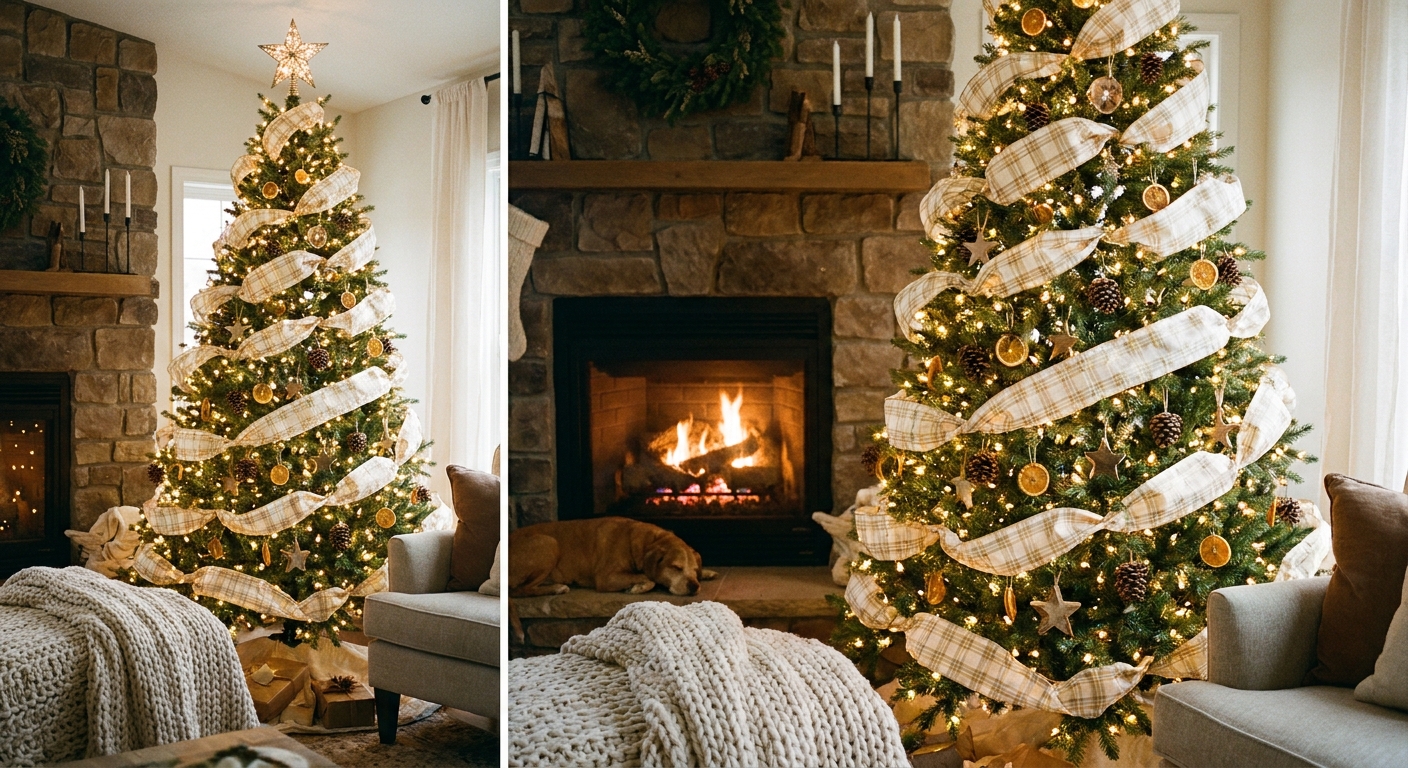
- Tying bows onto sturdier inner branches
- Tucking ribbon loops into branch forks
- Wiring bows to the branch base for support
Best tree picks by ornament type
If you know what kind of “sparkly weight” you hang every year, here is a simple match-up.
Heirloom glass (medium to heavy)
- Best real: Fraser fir, noble fir
- Best artificial: PE or mixed PE/PVC with firm branches
- Tip: Use wire hangers and place pieces closer to the trunk
Large statement ornaments (very heavy)
- Best real: Noble fir
- Best artificial: High quality mixed construction tree with thick primary branches
- Tip: Share the load across two branches for the heaviest pieces
Ornament collections with lots of lighter pieces
- Best real: Douglas fir, balsam fir
- Best artificial: PVC can work beautifully if branches are not flimsy
- Tip: Save branch tips for the lightest ornaments for a floaty, twinkly look
Real vs artificial: the practical trade-offs beyond branch strength
Holding heavy ornaments is the headline, but these factors can tip the decision.
Real trees
- Pros: Natural scent, organic look, unique branch character, great for traditional styling
- Cons: Branch strength changes as the tree dries, needles can loosen, and some shapes make heavy ornament placement tricky
Artificial trees
- Pros: Consistent branch support year to year, easy to plan ornament placement, less drying-related droop
- Cons: Quality varies widely, and weaker models can sag more than a good real fir
Safety notes for heavy ornaments
- Use a sturdy stand: A stable base reduces wobble that can shake ornaments loose.
- Mind pets and little climbers: Place breakables higher, and keep heavy pieces away from the lowest branches.
- Secure toppers well: A heavy topper needs wire or a stable attachment so it does not sway.
- Check branch sag early: After decorating, step back and look for drooping zones. Adjust before the branch “sets” under weight.
Sprig’s cozy bottom line
If your ornament box is full of heavy heirlooms, start with a tree known for structure: noble fir or Fraser fir for real, or a high quality PE or mixed PE/PVC artificial tree with firm, well-built branches. Then decorate like a little woodland engineer: heavy ornaments tucked inward, weight spread around, and a bit of wire support where it counts.
For more tree inspiration and theme ideas, hop over to Christmas Trees & Themes.
FAQ
Do artificial trees always hold heavy ornaments better?
Not always. A well-made artificial tree can be excellent for heavy ornaments, but a low quality model with thin wire branches can droop more than a sturdy real Fraser or noble fir.
What is the strongest real Christmas tree for heavy ornaments?
Noble fir is often considered one of the strongest for supporting heavier decorations, with Fraser fir also a top pick for dependable branches.
Are PE trees stronger than PVC trees?
PE versus PVC is mostly about needle realism. Strength comes from the branch wire gauge, hinge construction, and inner structure. Many of the strongest models are mixed PE/PVC because they combine a sturdy frame with a full look.
How do you hang heavy ornaments without bending branches?
Place them closer to the trunk, use floral wire instead of thin hooks, and consider anchoring extra-heavy pieces to two branches so the weight is shared.