Let's gather some sparkle and make your home merry and bright, with wagging tails and curious whiskers staying safe the whole season.
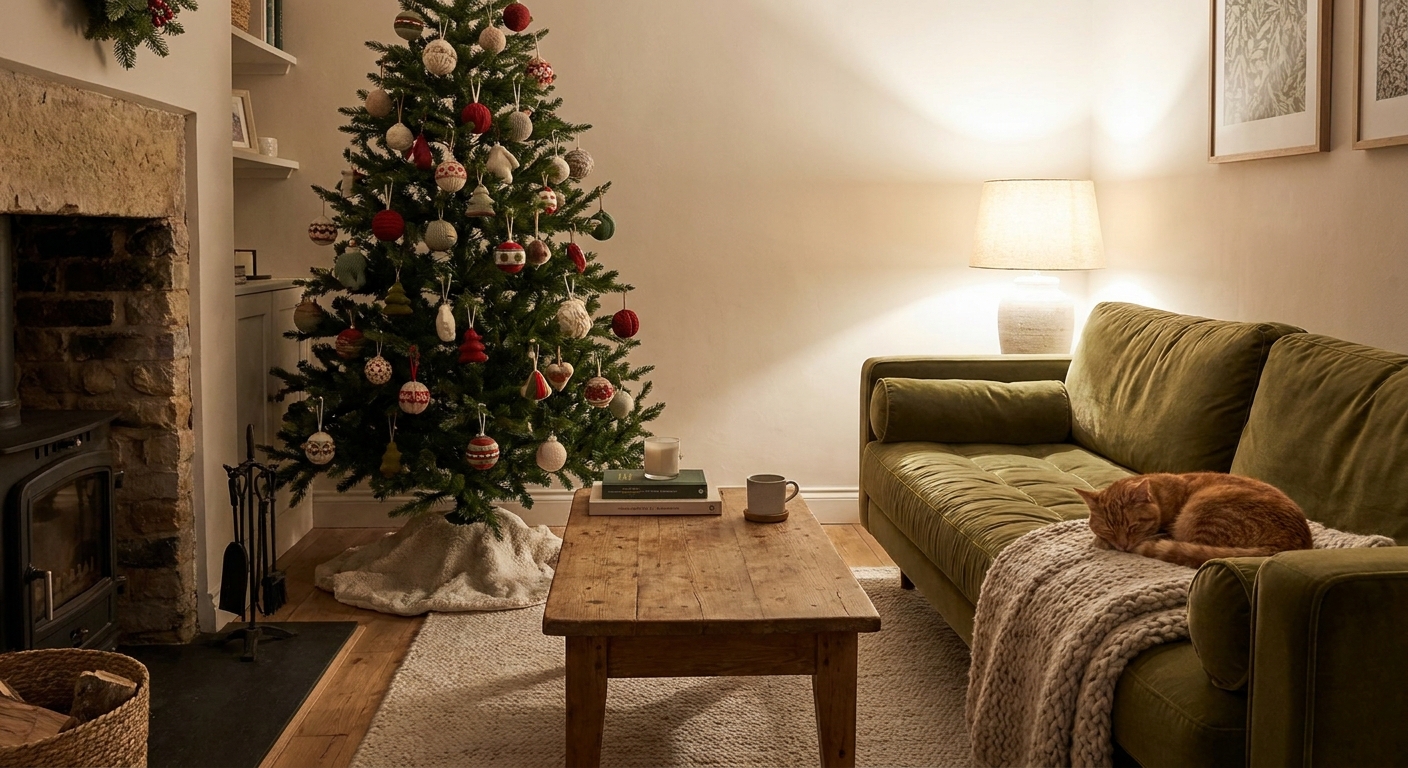
Start with the safest tree setup
Most pet trouble starts before a single ornament goes up. A stable, well-placed tree prevents tip-overs, chewing, and the classic cat launch from the arm of the couch.
Pick the right spot
- Away from launch pads: Keep the tree as far from sofas, shelves, window ledges, and side tables as your room allows (even 2 to 3 feet helps) so they do not act like jumping ramps.
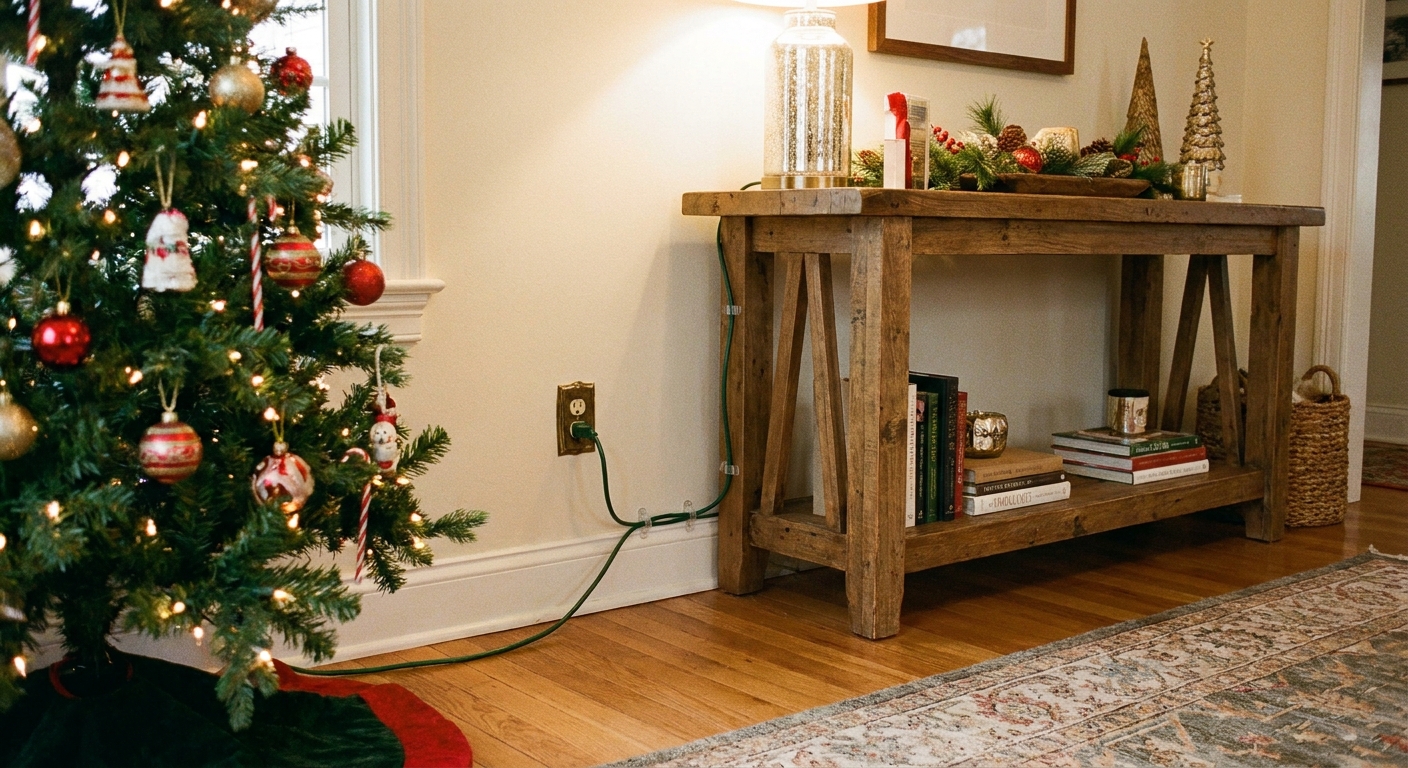
- Near an outlet, not across a walkway: Shorter cord runs mean fewer chances for a pet to snag or chew.
- Leave a "no-decor zone" at the bottom: Plan for the lower 12 to 24 inches to be simple and sturdy. This is the temptation zone for most pets.
Anchor the tree like you mean it
A heavier stand is helpful, but anchoring is what turns a wobbly tree into a steady one.
- Use clear monofilament to secure the tree to a stud-mounted or anchor-rated wall hook, or to sturdy furniture that cannot tip. Keep the line high and taut so it is harder to paw at, and out of chew reach.
- Try anti-tip furniture straps (the kind used to prevent dressers tipping) looped around the trunk behind the tree. Attach straps to a wall stud when possible, and keep straps and buckles where pets cannot chew them.
- Avoid relying on curtain hardware: Curtain rod brackets and lightweight hardware are not always designed for side-pull load. If you anchor, use hardware meant for that job.
- For real trees: keep the water reservoir covered or tucked where noses cannot access it, and check water daily so the trunk stays seated and stable.
Choosing between real and artificial? If you use heavier, pet-safer ornaments (like shatterproof balls or wooden pieces), make sure your branches can handle the weight without drooping. This guide can help with that planning: Real vs. artificial Christmas trees for heavy ornaments.
Choose pet-safer lights and manage cords
Lights are magical, and also one of the biggest hazards if chewed. The goal is simple: keep cords out of reach and keep chewing uninteresting.
Light choices that reduce risk
- LED over incandescent: LEDs run cooler, which lowers burn risk if a pet noses close.
- Look for sturdy insulation: Thicker, well-insulated cords are harder to damage.
- Use fewer connections: A single long strand can be safer than several short strands with extra plugs and join points.
Cord control that actually works
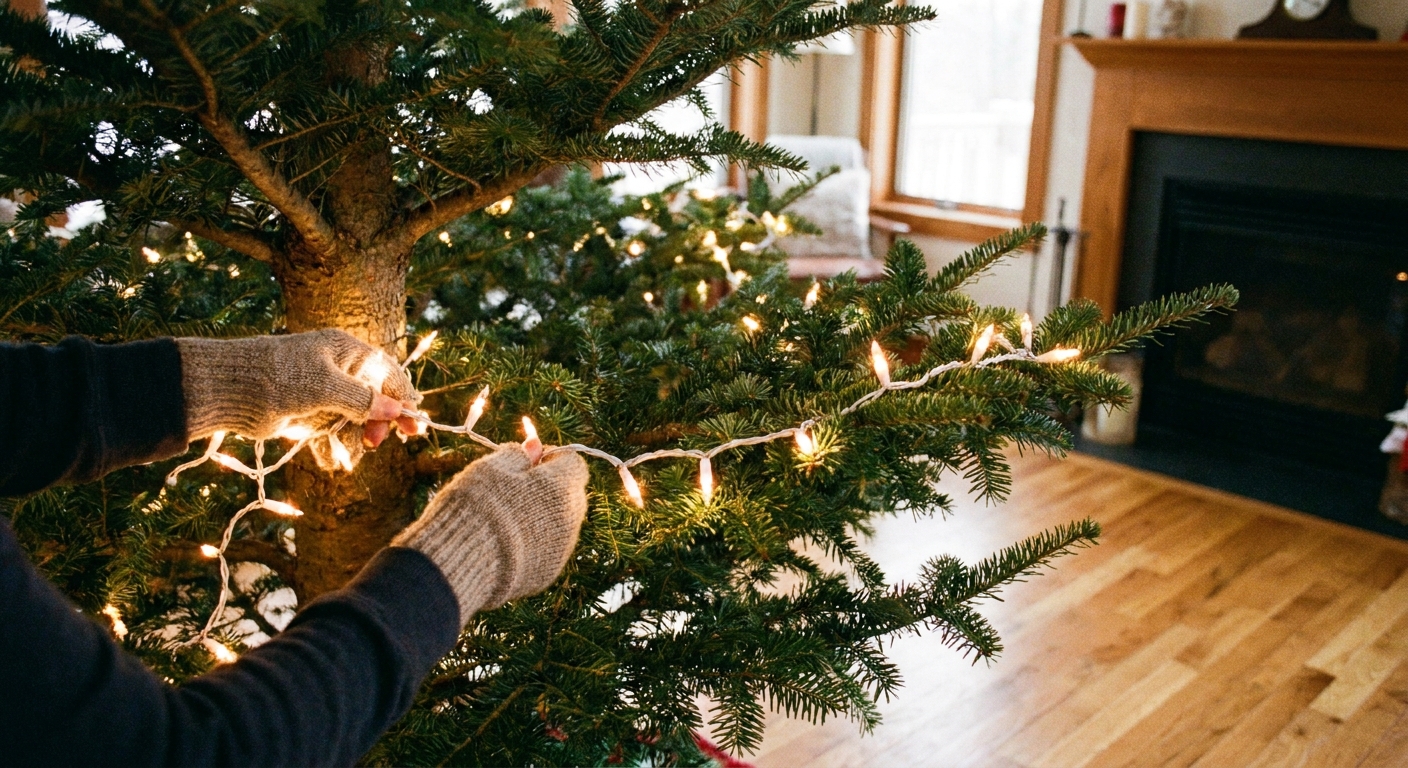
- Wrap lights tight to the trunk and inner branches first, then work outward. The less slack, the less dangling temptation.
- Route the main cord behind furniture and use cord clips to keep it snug against the wall.
- Cover the outlet area with a cord box or place a small, sturdy piece of furniture in front of it so it is harder to access.
- Unplug when you cannot supervise if your pet is known to chew cords.
- Skip bitter sprays as a main strategy: they are not universally effective, and some can stain surfaces. Physical cord management is the most reliable approach.
Pick ornaments that are pretty and paws-off
If it can shatter, splinter, snag a tooth, or be swallowed, it does not belong within pet reach. The good news is pet-friendlier ornaments can still look luxe and layered.
Best ornament materials for homes with cats and dogs
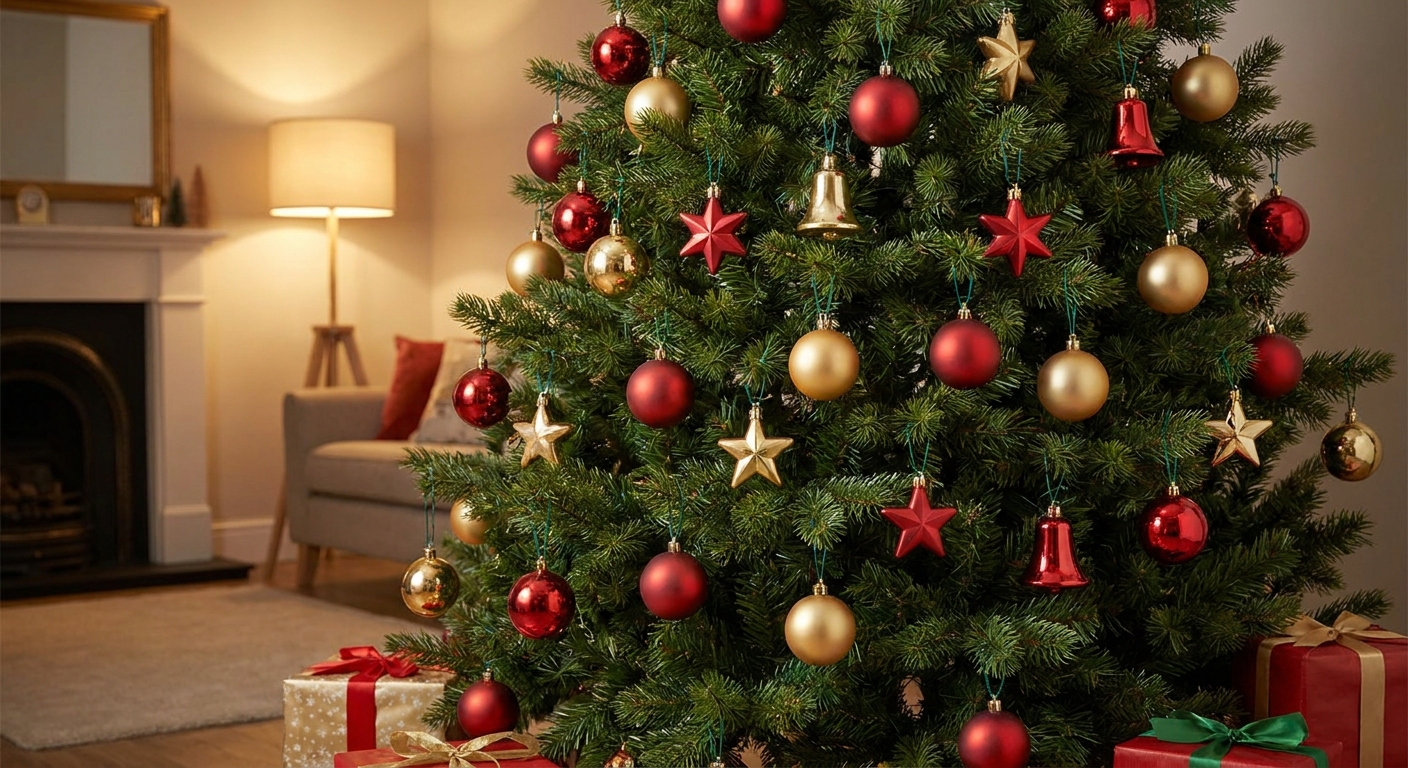
- Shatterproof plastic balls: Choose matte and glossy mixes for depth, and look for higher-quality, thicker shells.
- Wood ornaments: Great for a cozy look and less likely to break into sharp pieces.
- Felt ornaments: Soft and lightweight, especially nice for the lower third of the tree.
- Fabric bows and ribbon clusters: Big impact with less danger than breakable ornaments.
- Unbreakable picks and stems: Many have wire cores. Wrap or cap any cut wire ends, then tuck picks deep so nothing sharp can poke a nose or paw.
Ornaments to skip or move way up high
- Glass ornaments (even the ones labeled "thicker"): shards are a serious injury risk.
- Salt dough ornaments: often made with a lot of salt, which can be dangerous if eaten.
- Edible ornaments like popcorn strings, candy canes, chocolate, or doughnut garlands: they invite chewing and stomach trouble.
- Anything small enough to swallow or with loose parts like bells, beads, ornament caps, or tiny hangers.
- Metal hooks and thin ornament caps: these can be choking hazards, and swallowed metal can cause internal injury.
Make ornaments harder to steal
- Use ornament hooks that close or twist ties that are fully hidden behind the branch. Avoid open S-shaped hooks on lower branches.
- Secure the "bottom zone" with decor that is less interesting to pets: ribbon clusters, large shatterproof balls, and soft ornaments only.
- Cluster ornaments inward, not at the branch tips, so paws cannot easily bat them off.
Rethink tinsel, garland, and toppers
This is where trees get especially risky for cats, and sometimes dogs too.
Tinsel and icicles: best avoided
Tinsel (including angel hair and other fine "icicle" strands) can look dreamy, but it is a common swallowing hazard and can cause dangerous intestinal blockages. The safest choice is to skip it entirely in pet homes.
Safer swaps for sparkle
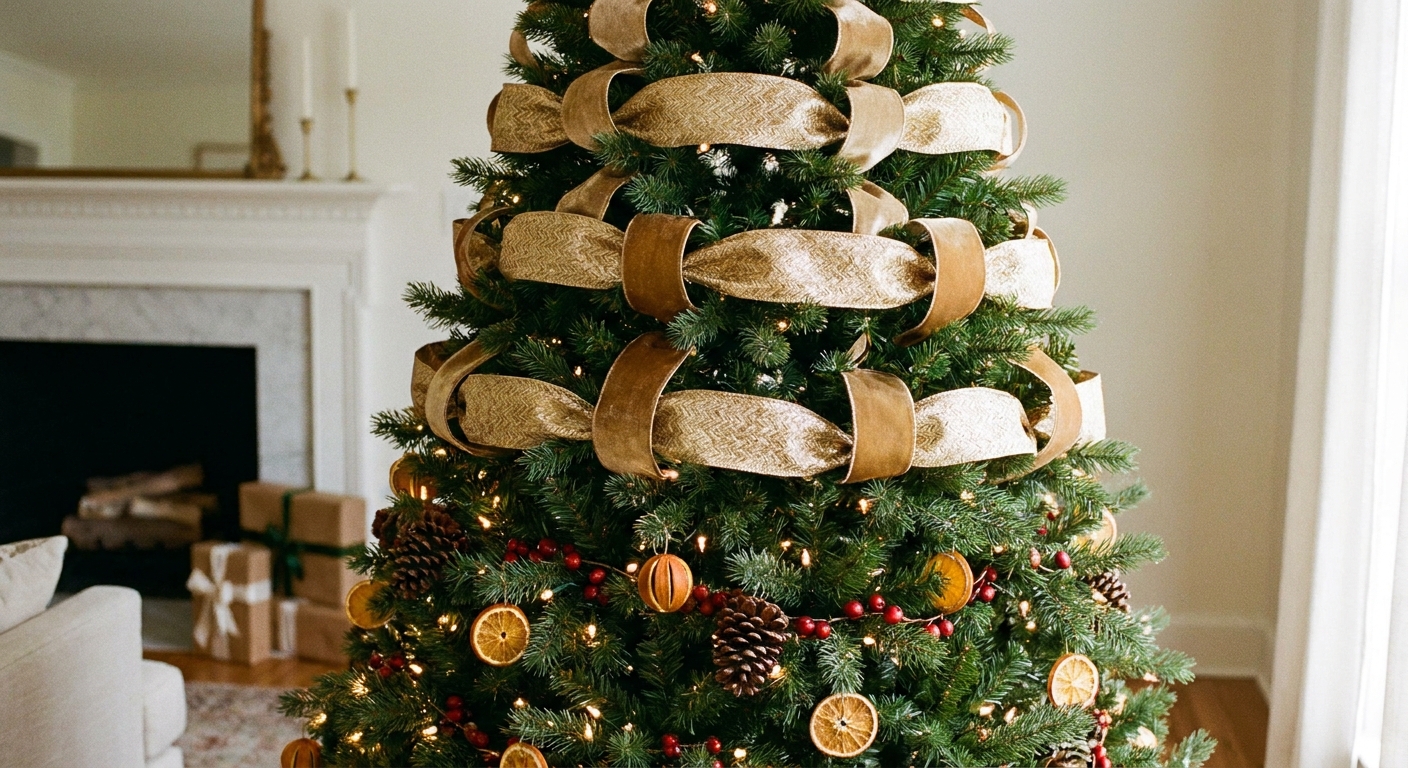
- Wide wired ribbon (2 to 4 inches) tucked deep and looped high.
- Oversized bead garland placed above pet reach, anchored to multiple branches so it cannot be pulled down easily.
- Fabric or felt garland for a cozy look with less snag risk.
A quick reality check: ribbon and garland are safer than tinsel, but any long, string-like decor can still be dangerous if a pet chews and swallows it. If your cat loves to nibble ribbon, skip long tails and keep loops short, tight, and high.
Topper tips
- Choose a lightweight topper that will not become a hazard if it falls.
- Secure it with extra wire and tuck the wire ends down the back of the trunk area.
- Avoid toppers with dangling strings or long decorative tails that invite batting.
Avoid toxic plants and add-ons
Some classic holiday greens and flowers are not pet-friendly. Even a small nibble can cause stomach upset, and some plants can be far more serious.
Use extra caution with these holiday favorites
- Mistletoe
- Holly
- Lilies (especially dangerous for cats)
- Amaryllis
- Poinsettias (often causes irritation and stomach upset)
If you love the look, consider placing real versions well out of reach in a closed room, or choose realistic faux stems instead. For a reliable, veterinary-backed reference list, the ASPCA Animal Poison Control toxic and non-toxic plant database is helpful: https://www.aspca.org/pet-care/animal-poison-control/toxic-and-non-toxic-plants.
Skip scent add-ons that tempt curious noses
- Essential oil diffusers near the tree: Cats are especially sensitive to many essential oils, and both cats and dogs can react depending on the oil and exposure. The safest move is to avoid diffusing around pets, keep good ventilation, and store oils where pets cannot access them.
- Artificial snow sprays and spray flocking: Ingredients vary, and some products can irritate or be harmful if licked or inhaled. In pet homes, it is safest to avoid spray-on products. If you use one anyway, follow the manufacturer instructions exactly for ventilation and dry time, and block access until fully dry. Prevent licking or branch-chewing regardless.
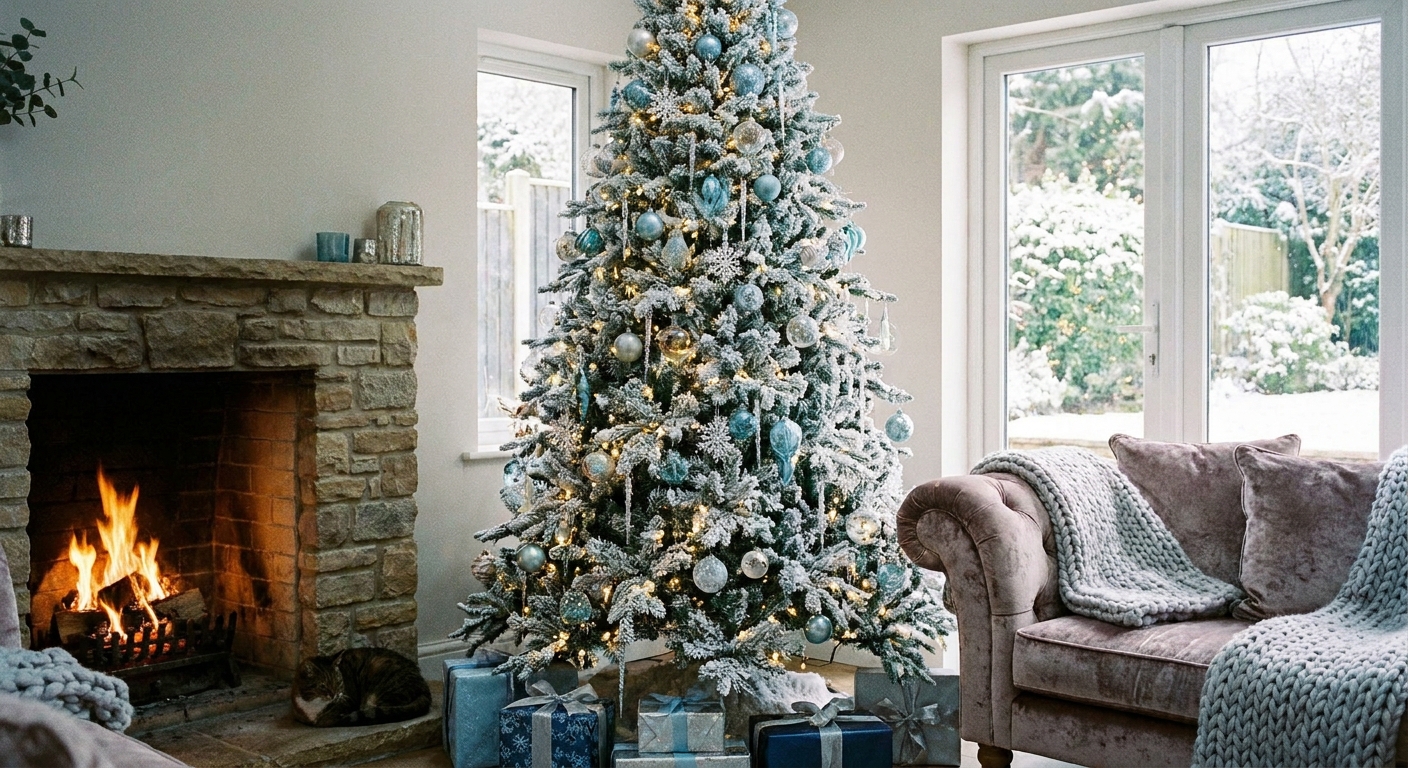
If you adore a snowy look, a fully flocked theme can be stunning. Just plan for extra supervision and keep the lower branches simple: Flocked Winter Wonderland Christmas Tree.
Real tree safety
Real trees smell like Christmas magic, but they come with a few pet-specific chores.
Needles can irritate mouths and paws
- Vacuum daily around the tree, especially if your pet lies nearby.
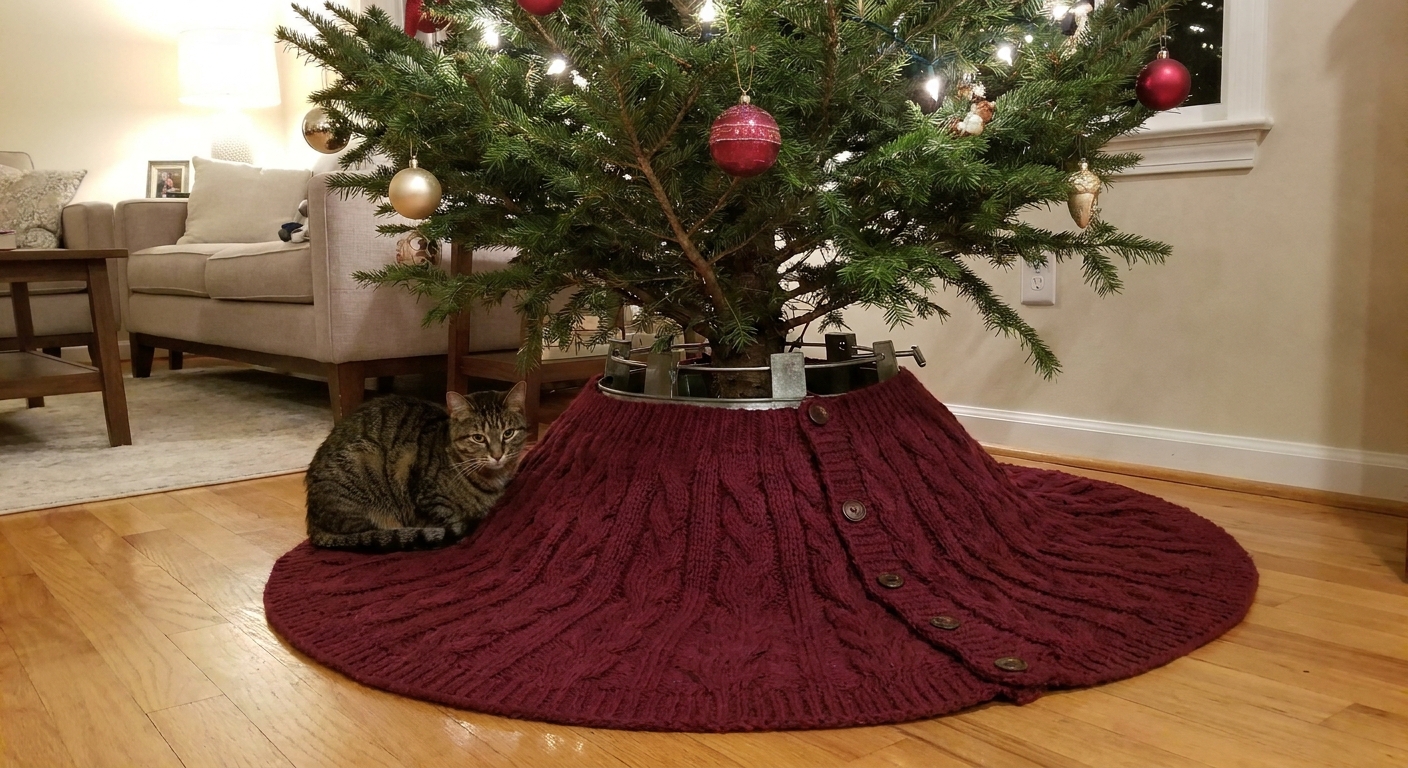
- Use a tree skirt that fits snug and reduces needle scatter, but avoid long fringe that can be chewed.
- Choose a low-shed tree when possible, and keep it well-watered so it drops fewer needles.
Tree water: keep it clean and inaccessible
- Cover the stand reservoir so pets cannot drink from it.
- Do not add preservatives or additives unless you are sure they will not create a pet hazard. When in doubt, plain water is the simplest choice.
Use smart barriers
If you have a climber, a chewer, or a puppy in the everything-goes-in-the-mouth stage, a barrier can save the season.
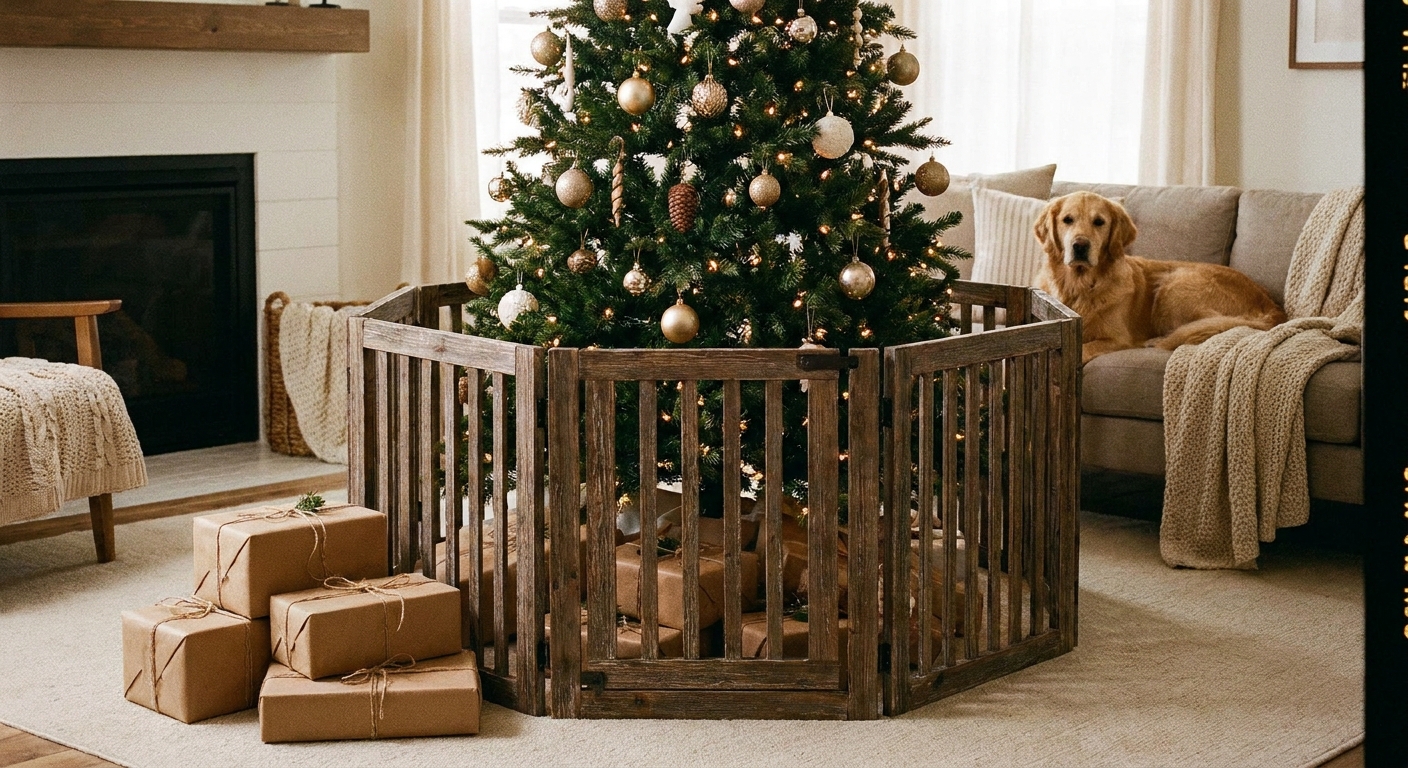
- Decorative pet gates or playpens: A simple circle around the tree can look tidy if you keep it close and add a few bows to match your theme.
- Tree collars: A collar can hide the stand and reduce access to the trunk and cords, especially when paired with tight cord routing.
- Strategic furniture: A small console table or chair placed to block one side can reduce approaches from the "best pounce angle".
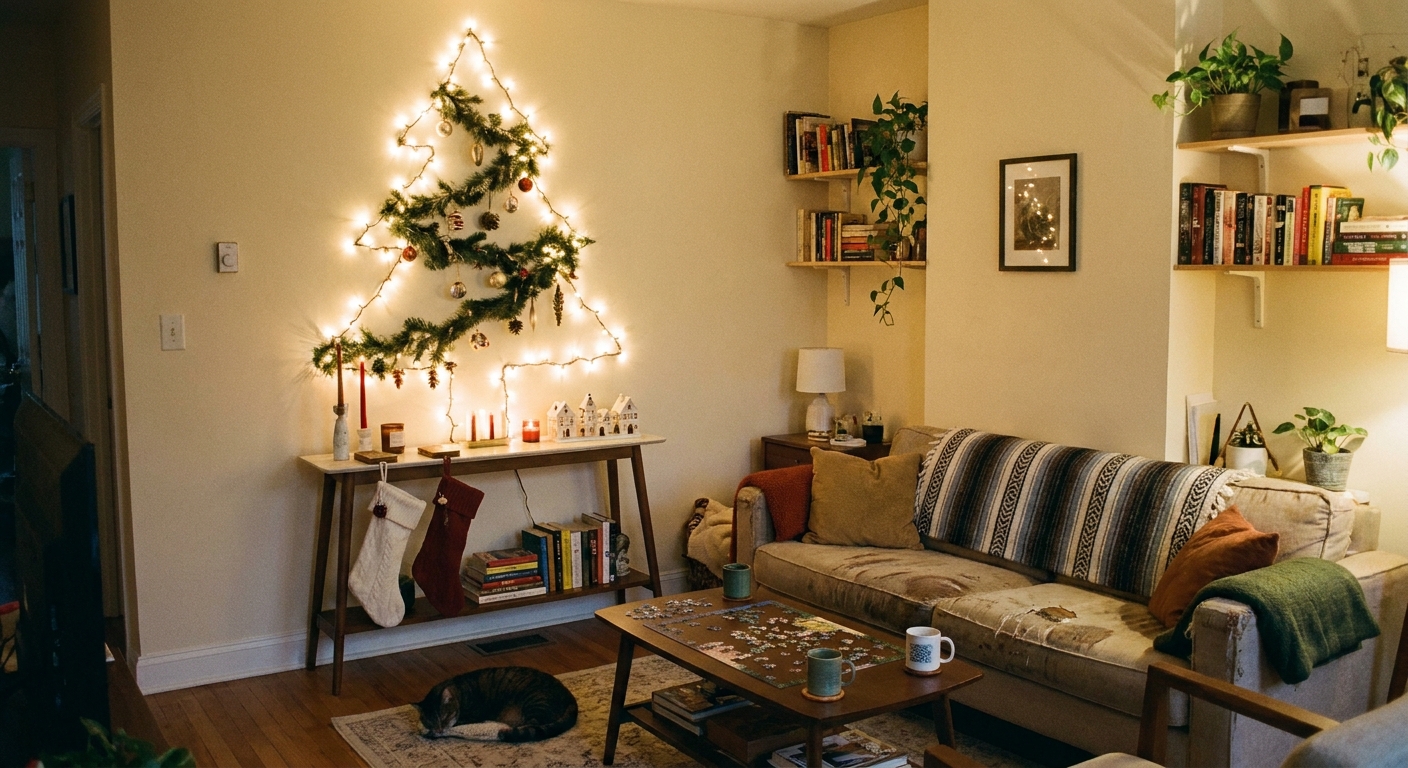
Working with a smaller tree can also help keep decor out of reach while still feeling full and festive. If space is tight or you want a safer footprint, these ideas can help: 15 space-saving alternative Christmas tree ideas.
Pet-friendly decorating plan
Use this as a simple build order so safety is baked in from the start.
- Place and anchor the tree (stand plus wall strap or monofilament).
- Install lights tight to trunk and inner branches, then secure cords.
- Decorate the top third first with your most delicate or special items.
- Middle third: shatterproof ornaments, ribbon clusters, and larger pieces secured close to the branches.
- Bottom third: soft ornaments, unbreakable decor, and fewer dangly elements.
- Final scan: no loose hooks, no reachable cords, no chewable fringe, no edible decor, and no long string-like pieces your pet could swallow.
If something goes wrong
Even with the coziest planning, curiosity can win. If you suspect your pet chewed a cord, swallowed tinsel, ate an ornament cap, or got into a plant, contact your veterinarian right away. If you are in the US, ASPCA Animal Poison Control has emergency guidance: https://www.aspca.org/pet-care/animal-poison-control.
Signs to take seriously
- Repeated vomiting or gagging
- Drooling, pawing at the mouth, or trouble swallowing
- Loss of appetite or lethargy
- Coughing, wheezing, or labored breathing
- Evidence of string, tinsel, ribbon, or garland ingestion
Pet-friendly tree ideas
Safety does not mean plain. Try one of these looks that keeps sparkle up high and temptation down low.
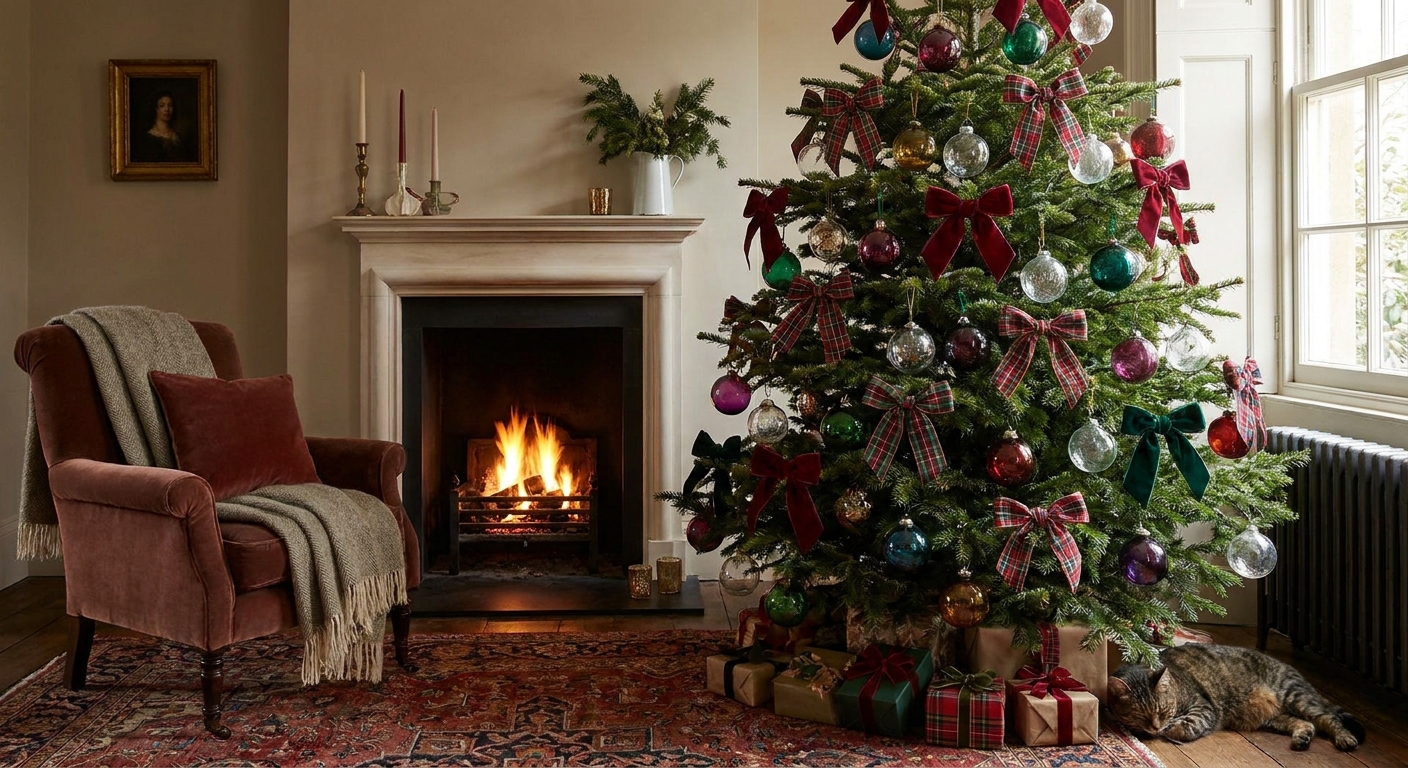
Ribbon-and-bow tree
Use wide ribbon garland and oversized bows concentrated in the upper half, with shatterproof ornaments throughout. Keep the lower branches mostly ribbon clusters and a few large, lightweight pieces, and avoid long tails if your pet likes to chew.
Woodland cozy tree
Lean into wood, felt, and fabric ornaments, then add warm lights and pinecone picks placed deeper in the branches. Skip anything with glitter that sheds.
Minimalist top-heavy sparkle
Place the most eye-catching ornaments and clusters near the top, then fade to simpler decor near the bottom. Your pets get less to investigate, and your tree looks intentionally styled.
Need budget-friendly options for shatterproof decor, ribbon, and cozy filler? Tuck a peek into A stunning Christmas tree on a $50 budget and swap fragile items for pet-safer materials.
FAQ
Are Christmas tree needles toxic to cats and dogs?
Christmas tree needles (fir, spruce, and pine) are generally low-toxicity, but they can irritate the mouth and stomach. The sharp shape can also cause trouble if swallowed, especially in quantity. Keeping the area vacuumed and limiting access helps a lot.
Is flocking safe around pets?
It depends on the product and your pet's habits. If a pet chews branches, any coating can become a concern. The safest approach in pet homes is to avoid spray flocking and artificial snow sprays. If you buy a pre-flocked tree, supervise, keep the lower branches simple, and discourage licking and chewing.
What can I use instead of tinsel?
Wide ribbon clusters, fabric garland, and shatterproof ornament clusters create the same sparkle and movement, without the fine-string swallowing risk. If your pet chews, avoid long tails and any loose, string-like decor.
How do I stop my cat from climbing the tree?
Anchor the tree to a stud-mounted or anchor-rated hook, move it away from jump points, keep the bottom third boring, and use a gate if needed. A sturdy setup and fewer dangling temptations usually reduce the urge to climb.