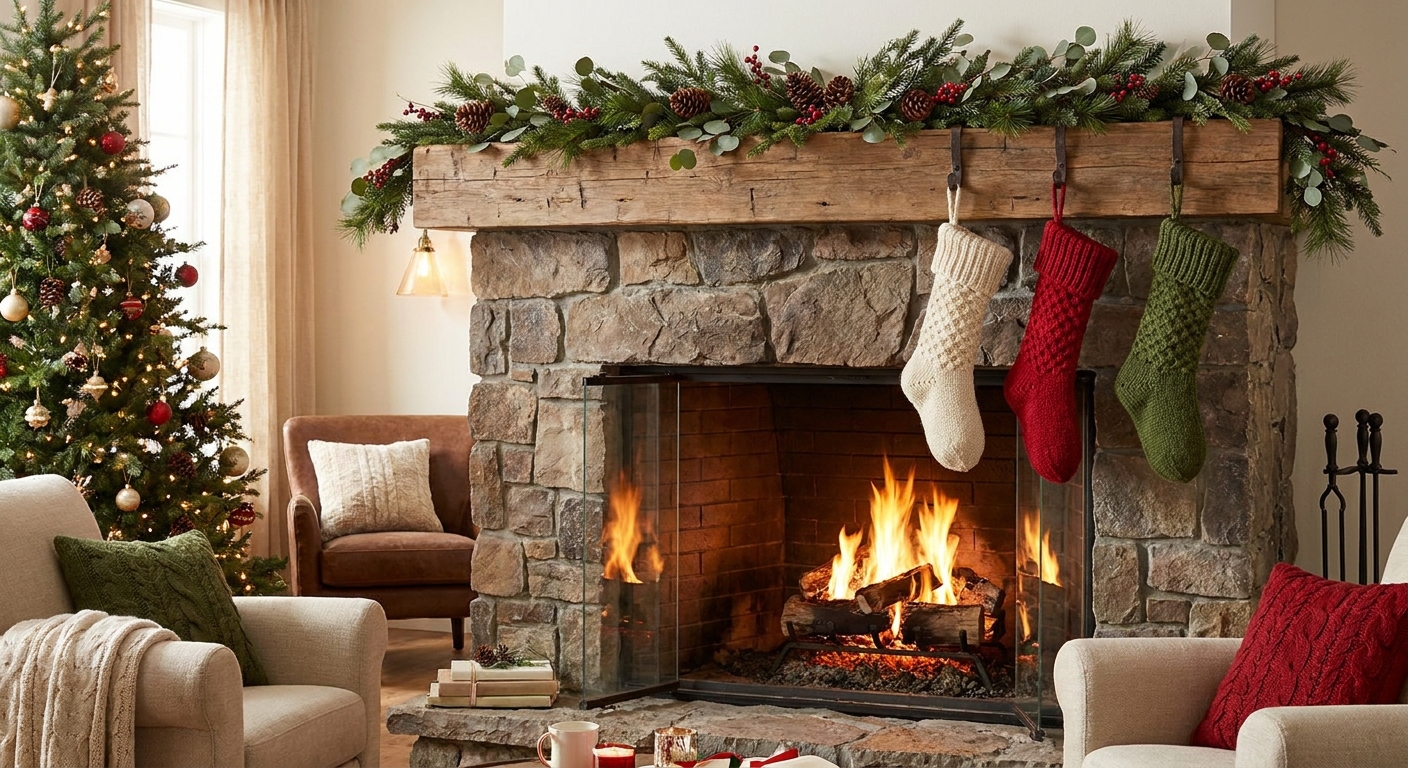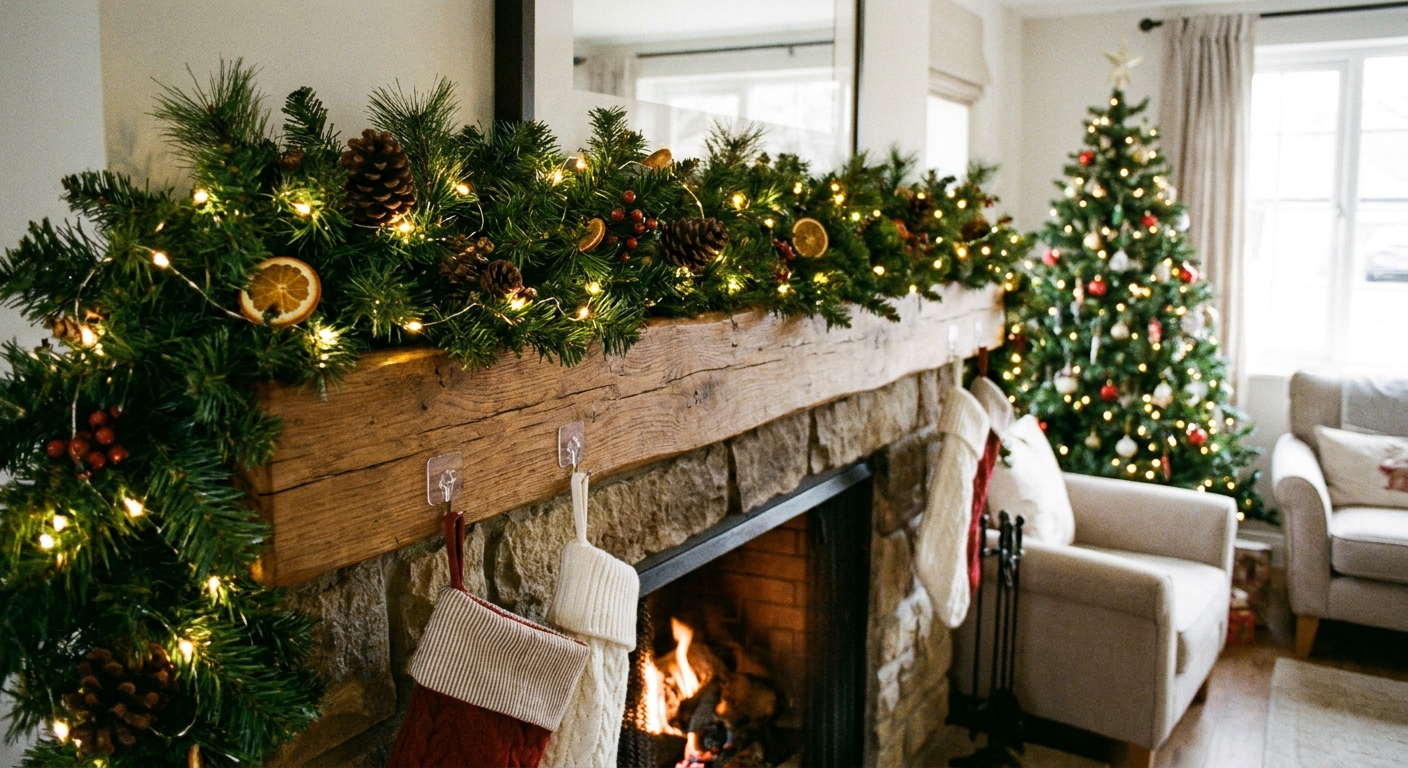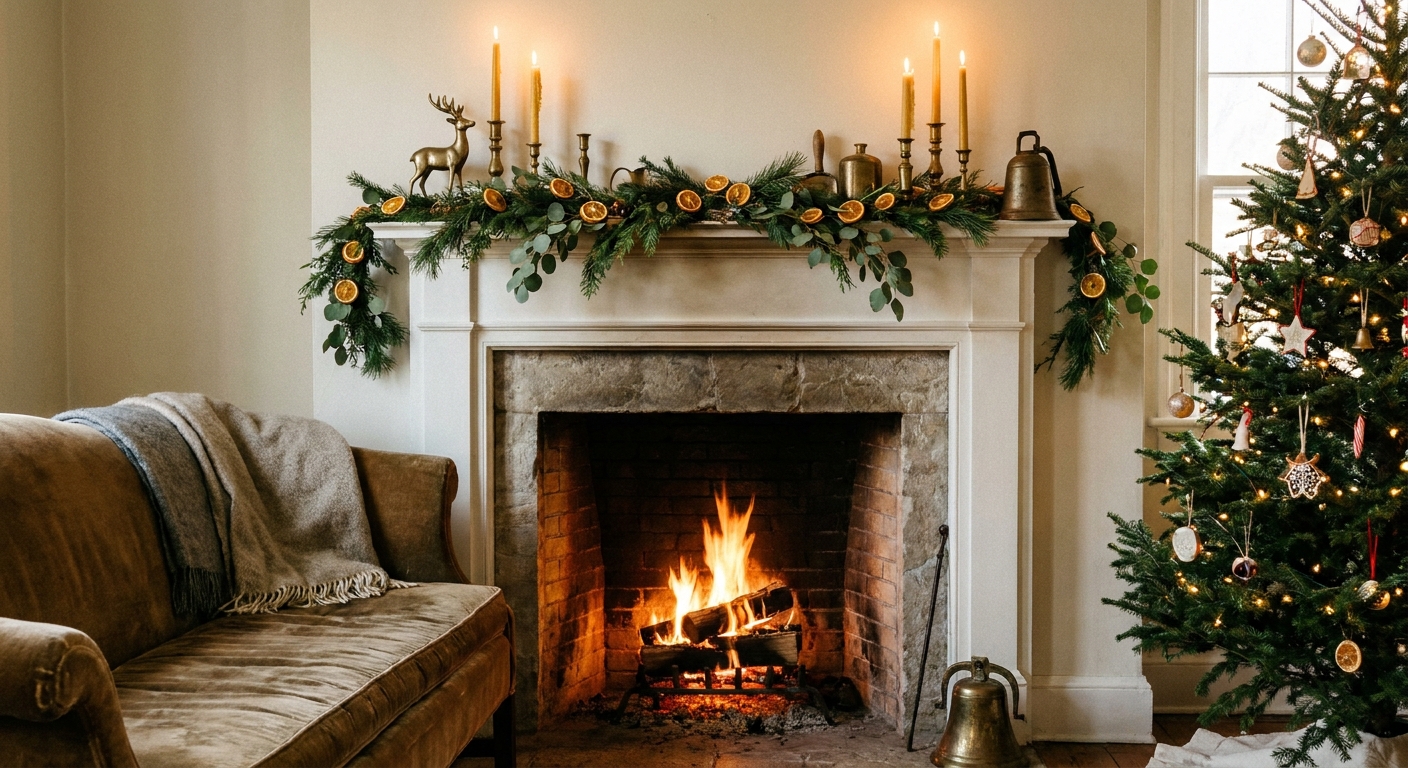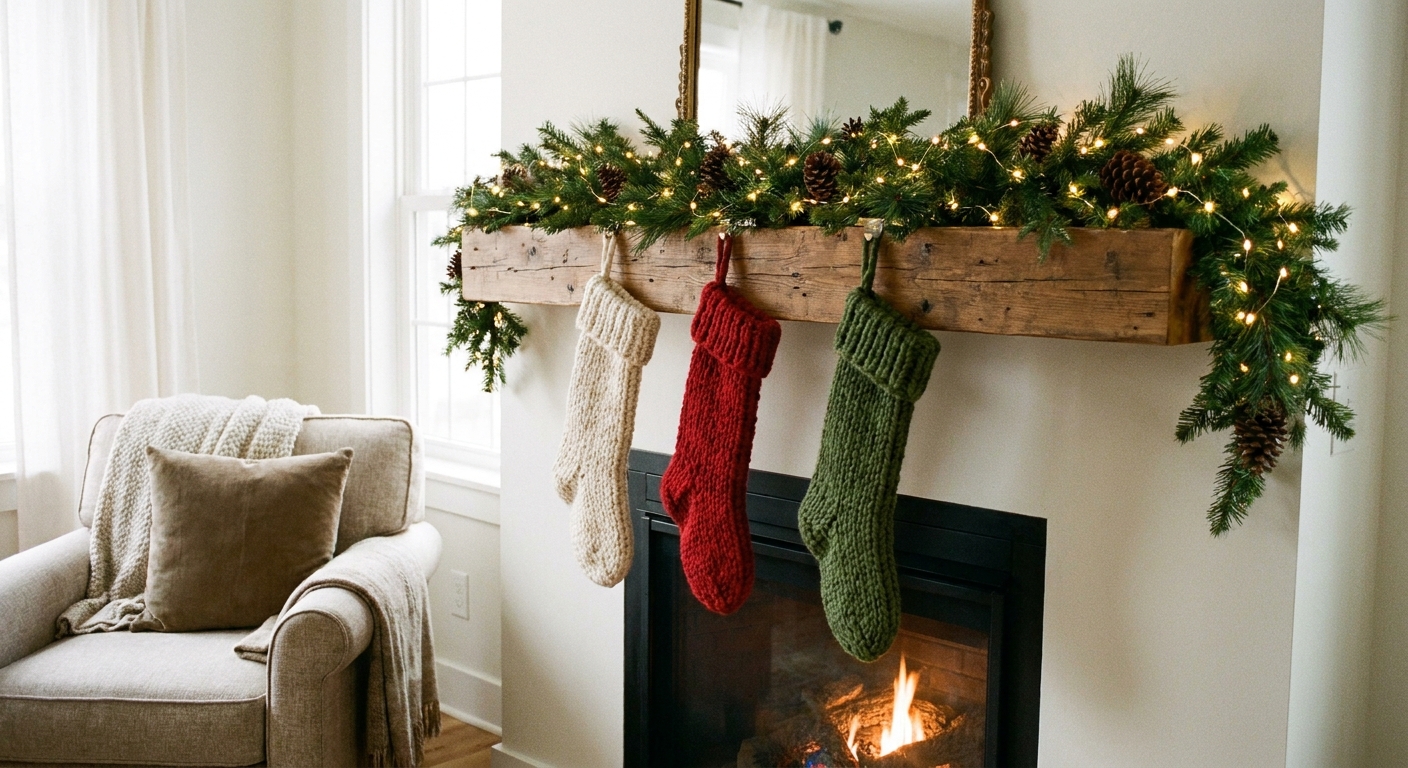

Let's gather some sparkle and make your home merry and bright! When it comes to Christmas mantels, there are two dazzling paths: symmetrical (a classic, perfectly mirrored look) and asymmetrical (a modern, one-sided cascade that still feels balanced). The best choice is the one that fits your room, your decorating energy, and how you use the fireplace each day.
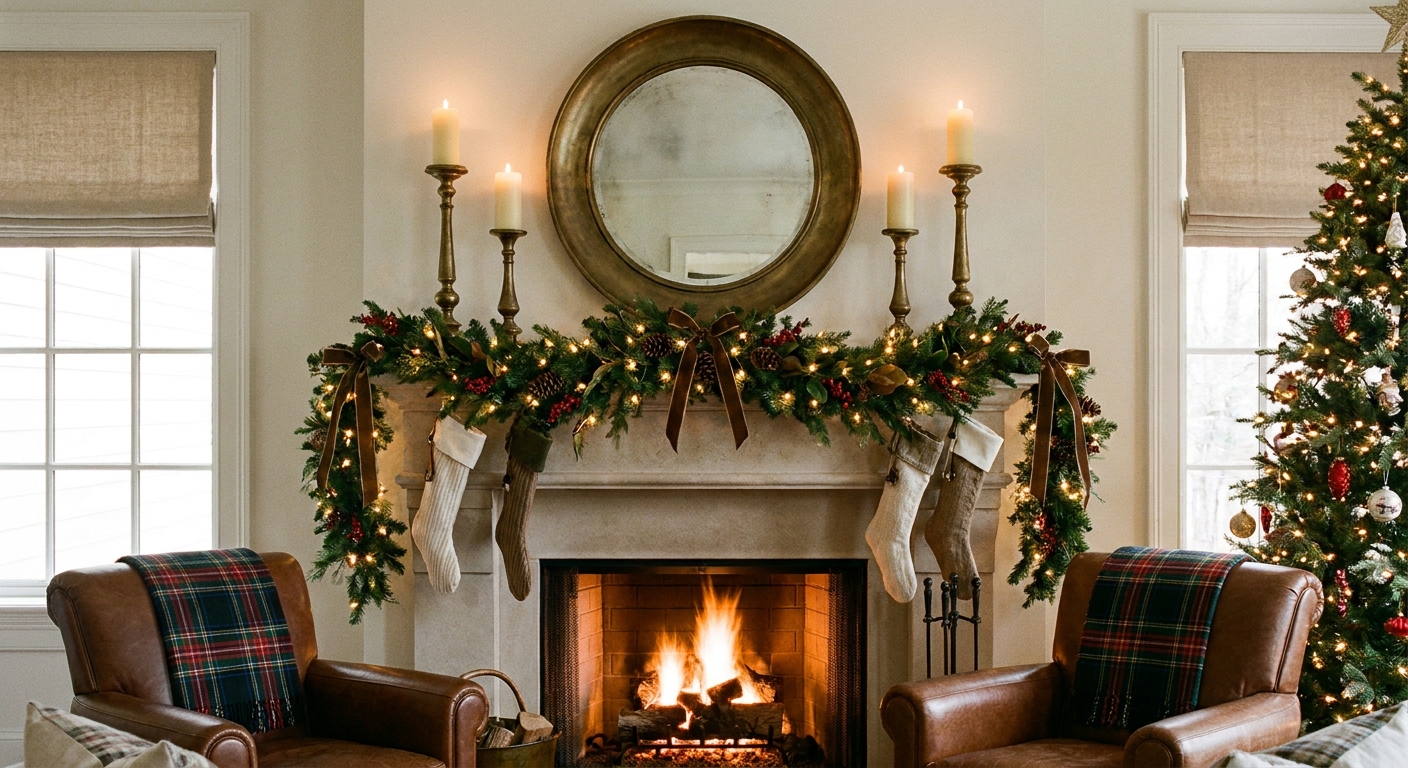
Symmetry vs. asymmetry
Symmetrical mantels repeat visual weight on both sides of a center point. Picture matching stockings, twin lanterns, and identical mini trees flanking a mirror.
Asymmetrical mantels place the “heavier” cluster on one side and use lighter elements to balance it. For example: a tall vase and sweeping garland on the left, then a smaller candle trio and a frame on the right.
- Symmetry feels: traditional, tidy, formal, peaceful
- Asymmetry feels: modern, playful, artistic, relaxed
Choose your best style
Go symmetrical for classic structure
- You feel happiest when things look evenly spaced and “finished.”
- Your mantel is centered on the wall and already acts like a focal point.
- You decorate with matching sets (pairs of candleholders, twin mini trees, same-size frames).
- You want a timeless look that photographs beautifully from straight-on.
Go asymmetrical for movement
- You like collected decor (mixed metals, thrifted frames, varied heights).
- Your room layout is off-center and symmetry would look forced.
- You want the mantel to feel styled, not staged.
- You love draped garland, ribbon tails, and ornament clusters that flow.
Cannot decide? Try mostly symmetrical
This is a sweet spot: keep the center anchored (mirror or art, garland running across), then let one side be slightly fuller with a small height difference. It reads classic, but it has a little sparkle of personality.
Basics both styles need
No matter which path you choose, a mantel looks best when these five ingredients are in the mix:
- An anchor: a mirror, artwork, or TV area you visually frame
- Height variation: tall, medium, and low items (trees, candlesticks, frames)
- Texture: greenery, knit stockings, velvet ribbon, ceramic, wood
- A consistent glow: warm white lights, candles (real or flameless), or both
- Clear negative space: breathing pockets so it feels elevated, not crowded
If your mantel sits over a working fireplace, keep safety front and center. Heat rises and mantel clearances vary, so never assume decor is safe just because it is “high enough.” Keep all greenery, stockings, ribbon, paper, and other combustibles well away from the firebox opening and any hot surfaces. Skip real candles on or near garland, and choose flameless candles instead. For a full safety-first setup, visit Fireplace Mantel Decor That Stays Safe With a Real Fire.
Scale and proportion
This is the part that makes a mantel look intentional instead of “stuffed.” A few quick, easy guidelines:
- Use one clear hero: your anchor (mirror or art) should be the biggest visual moment, with decor supporting it.
- Work in thirds: aim for one tall element, a couple medium elements, and a few low elements across the shelf.
- Leave landing space: even a small open stretch of mantel helps the whole display feel higher-end.
- If your mantel is short: go smaller with bookends and choose one statement cluster rather than lots of minis.
TV above the mantel?
You can still decorate beautifully. Keep the top line of your decor below the bottom edge of the screen so you are not blocking the view. Choose lower-profile pieces (garland, shorter candlesticks, mini trees) and keep anything heat sensitive away from the fireplace opening. If you are framing a TV, a slimmer garland with a few clustered accents often looks cleaner than a super deep swag.
Build a symmetrical mantel
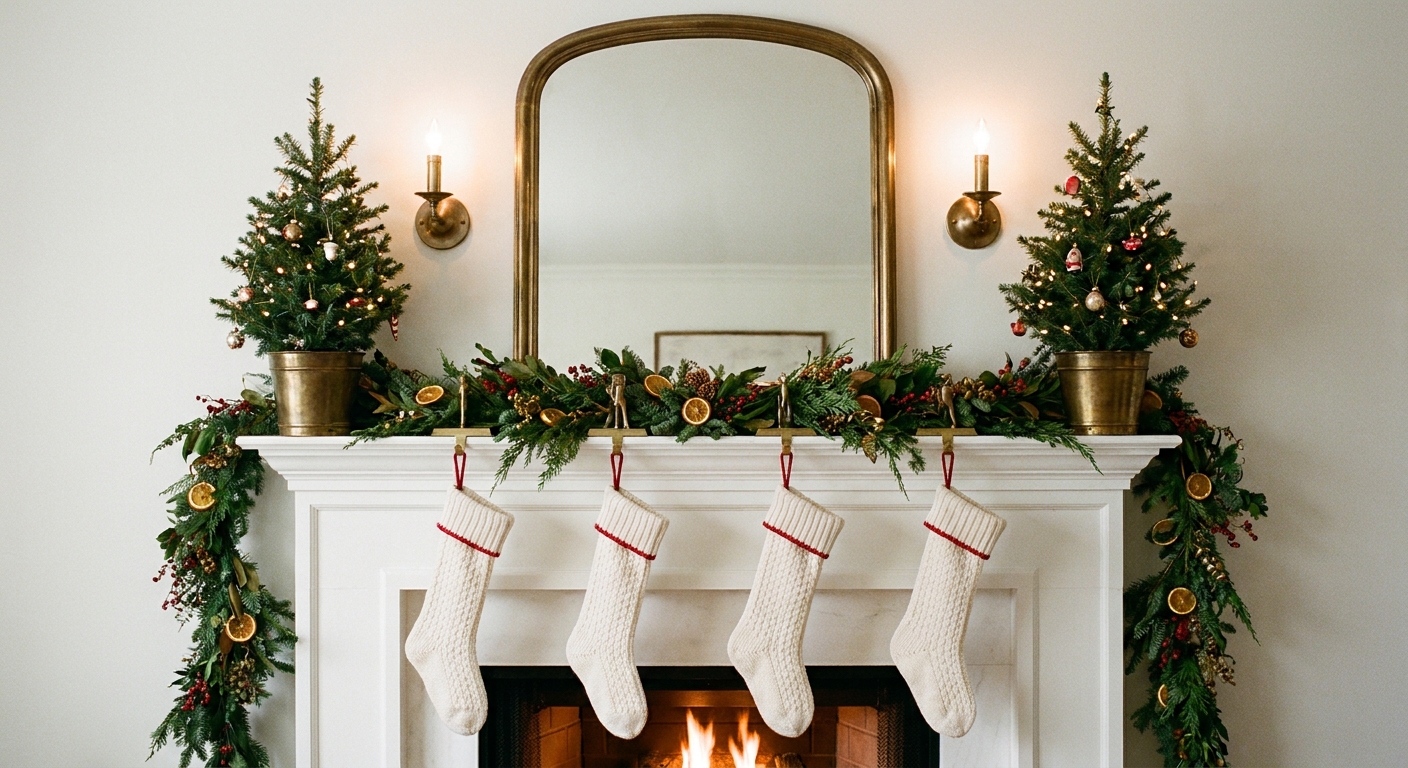
- Choose your center point. Usually a mirror or framed art. Center it on the mantel, not necessarily the wall, especially in older homes where fireplaces can be slightly off.
- Lay in greenery across the full length. Use one garland or two that meet in the middle. Fluff it evenly so both sides match.
- Add matching bookends. Place identical lanterns, trees, or vases at each end for instant polish.
- Repeat your mid-size items. If you have nutcrackers, candlesticks, or small houses, place them in pairs at similar distances from center.
- Hang stockings in even spacing. Keep stocking lengths consistent or choose a planned pattern, like two long knits and two short velvets, mirrored left to right.
- Finish with a single focal accent. A centered bow, wreath, or starburst ornament at the mirror top adds “ta-da” without clutter.
Symmetry cheat codes
- Work in pairs: two trees, two lanterns, two candlesticks, two stacks of books.
- Match height and visual weight: objects do not have to be identical to feel symmetrical.
- Keep the palette tight: 2 to 3 main colors often looks especially crisp in symmetrical styling.
Need budget-friendly symmetrical ideas that still look luxe? Peek at 10 Elegant Budget Christmas Mantel Ideas.
Build an asymmetrical mantel
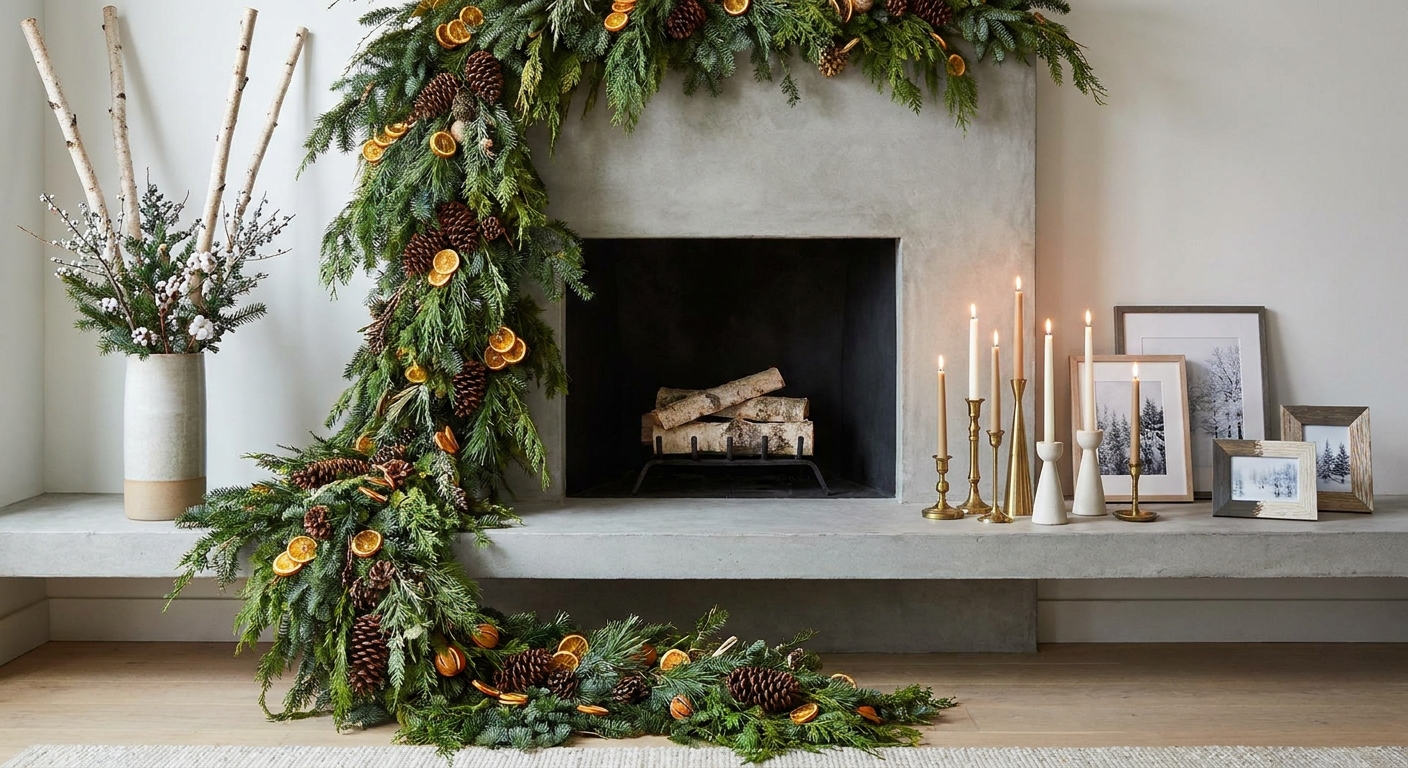
- Start with a strong anchor. A mirror or art still helps, even for asymmetry. Keep it centered or slightly off-center based on your room layout.
- Decide your heavy side. Choose left or right. This is where your tallest piece and fullest greenery will live.
- Create a tall-to-short slope. Place your tallest item first (vase with branches, tall tree, oversized lantern), then step down with medium items, ending with low items near the center.
- Drape garland with intention. Make the garland fuller on the heavy side and lighter as it travels across. Let it dip and rise naturally, like a cozy woodland trail.
- Cluster your glow. On the heavy side, tuck your lights deeper into the garland so the brightest sparkle sits near your main focal cluster. Then lightly continue lights across so the mantel still feels connected, not split into two separate halves.
- Balance with a small counterweight. On the light side, add a single medium object or a tight trio (candle, small tree, framed photo) so the mantel does not feel lopsided.
- Repeat one detail across both sides. Repeat ribbon color, ornament finish, or candle color so the whole mantel still feels connected.
Asymmetry cheat codes
- Use the rule of three: group objects in threes for a styled look.
- Mix shapes: round wreath, tall candlestick, squat ceramic house keeps it lively.
- Keep one quiet zone so the cascade feels intentional, not crowded.
Want extra movement and drama? Borrow tree-styling tricks and scale them down to the mantel, like ribbon tails and gentle draping. The ribbon approach in Ribbon Cascades on a Christmas Tree translates beautifully to garland and mantel swags.
Copy-and-go formulas
Formula A: Classic symmetry
- Center: mirror or art
- Greenery: full-length garland with lights
- Ends: matching lanterns or mini trees
- Middle: two candlesticks per side
- Stockings: evenly spaced, matching hangers
Formula B: Modern asymmetry
- Heavy side: tall vase with branches plus a lantern
- Greenery: garland draped heavier on the tall side
- Accent: ornament cluster tucked into the garland near the tall piece
- Light side: one candle trio plus a small framed piece
- Unifier: same ribbon color tied in two spots
Formula C: Minimal and cozy
- One simple garland (no fussing with lots of picks)
- Two to four flameless candles
- One wreath above
- Stockings only, no extra tabletop decor
Common mistakes
Mistake: it looks flat
- Fix: add height. Use a tall vase, candlesticks, or a small tabletop tree.
Mistake: it looks cluttered
- Fix: remove one category. For example, keep houses and candles, but skip extra figurines.
Mistake: the stockings steal the show
- Fix: simplify what sits on the ledge, or raise the garland slightly so there is a stronger top frame.
Mistake: asymmetry looks accidental
- Fix: add a counterweight on the lighter side and repeat one finish across both sides (gold ornaments, red berries, or matching candle color).
Mistake: nothing stays put
- Fix: use removable hooks and proper supports. For garland, see How to Hang Heavy Garland on a Mantel Without Nails.
Mini FAQ
Can a mantel be symmetrical if the wall is not?
Yes. Center your design on the fireplace opening or the mantel shelf, then keep the rest consistent. Symmetry looks best when it aligns to a strong architectural feature.
Is asymmetrical decor harder to get right?
It can feel trickier at first, but it becomes easy with one rule: build a tall-to-short slope on your heavy side, then add a small counterweight on the other side.
How many stockings look best?
For symmetry, even numbers look crisp. For asymmetry, any number works, but keep spacing consistent and keep the heaviest decor from crowding the stockings.
What if there is no fireplace at all?
You can still use these styling rules on a faux mantel, console, or shelf. For cozy alternatives, visit No Fireplace? 7 Faux Mantel Ideas for Christmas Stockings.
Pick your style
If you want timeless and tailored, choose symmetry. If you want movement and a fresh, styled look, choose asymmetry. Either way, a little glow, a little greenery, and a clear focal point will make your mantel feel like the coziest spot in the whole winter wonderland.