Let's gather some sparkle and make your outdoor Christmas cheer sturdy enough to handle winter's biggest huffs and puffs. With the right anchors, ties, and a few storm-smart habits, you can keep inflatables, light frames, wreaths, and porch pieces right where you placed them, even when the weather gets bossy.
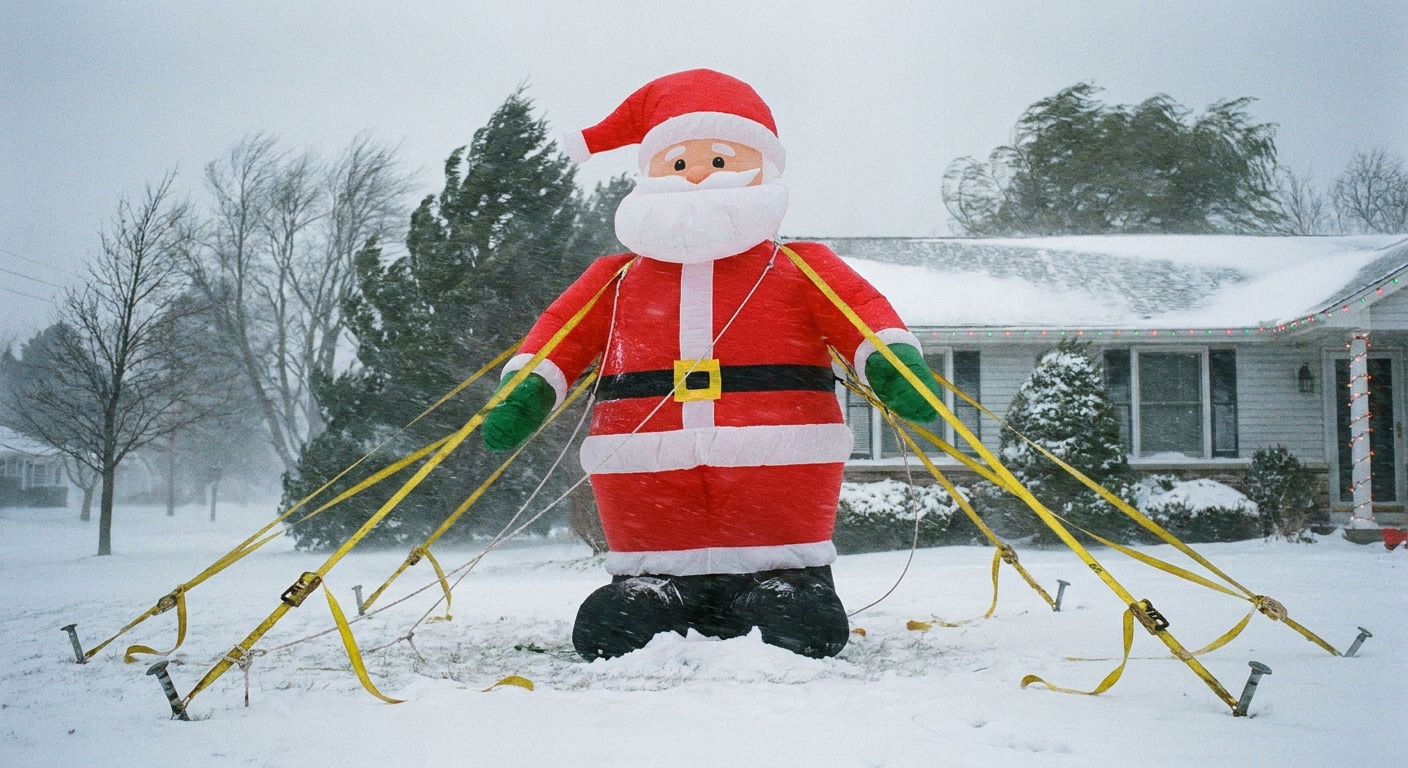
First, spot the real troublemakers
Wind usually causes problems in three ways: it lifts (like a sail), it slides (skates across ice), or it whips (repeated tugging that loosens knots and fasteners). Before adding more decorations, do a quick scan:
- Big surface area: inflatables, large bows, flat plywood signs, wreaths on open railings.
- Tall and narrow: lighted deer, nutcrackers, spiral trees, pathway arches.
- Top-heavy: porch planters filled with picks, stacked gift boxes, lantern towers.
- Slippery bases: anything sitting on ice, smooth concrete, or a slick porch rug.
Once you know how the piece wants to move, it's easy to choose the right kind of hold.
Anchoring basics: a simple rule that works
For most outdoor decor, aim for two kinds of security:
- Anchor down (stakes, screws, weights).
- Stabilize side-to-side (guy lines, cross-ties, brackets).
That combo prevents the wobble that turns into tipping, and it keeps constant gusts from slowly loosening your setup.
Best hardware for windy yards and winter soil
Stakes that actually hold
- Spiral dog tie-out stakes: Great for inflatables and guy lines. The twist design bites into soil better than straight stakes.
- Rebar stakes (often 12 to 24 inches): A strong choice for light frames and wire figures. Choose length based on your decor size and soil type, and use a cap or protective end so no sharp tips are exposed.
- Landscape staples: Handy for pinning down light strings and keeping cords routed neatly along edges. Use them only as a guide alongside a cord, never piercing, pinching, or stapling over an extension cord jacket.
Quick ground-type notes
- Soft or wet soil: Go for longer or spiral-style anchors and wider guy-line angles.
- Mulch beds: Stakes can loosen as the mulch shifts, so add weights or tie to a more stable point when you can.
- Rocky or frozen ground: Skip the wrestling match and switch to weights and attachment points on a porch, deck, or solid structure.
When the ground is frozen
Frozen ground is tricky because many stakes will not penetrate well. Try these safer options:
- Sandbags or weight bags: Tuck them behind decor or inside hollow bases. Avoid putting loose sand where it can spill onto walkways.
- Weighted bases: Patio pavers or flat stepping stones work well when strapped tightly to the decor frame.
- Porch and deck attachment points: Railings, posts, and structural legs are often better than fighting frozen soil.
Heavy-duty ties: what to use (and what to avoid)
Best tie options
- Outdoor-rated zip ties (UV resistant): Fast, neat, and strong. For extra hold on a frame, use two zip ties crisscrossed, with the locking heads on opposite sides.
- Rubber-coated twist ties: Great for light strings where you want grip without cutting into wires.
- Polypropylene rope or paracord: Ideal for guy lines. It handles moisture better than cotton.
- Ratchet straps: Perfect for larger pieces that must not budge, like big lighted frames or heavy porch props.
Protect surfaces while you secure
- Add a buffer: If a strap or rope touches painted rails, posts, or metal, slip a soft cloth or rubber pad under it to prevent rubbing and scuffs.
- Avoid flimsy attachment points: Gutters, downspouts, and some vinyl railings can bend or crack under tension. When possible, tie to structural posts, sturdy railing supports, or a dedicated anchor.
Avoid these common culprits
- Indoor tape: It fails in cold and leaves sticky residue.
- Thin string: It snaps and can saw into wires or branches when it whips in the wind.
- Metal wire against cords: It can damage insulation. If you must use wire, add a soft buffer layer between wire and cord.
How to secure yard inflatables
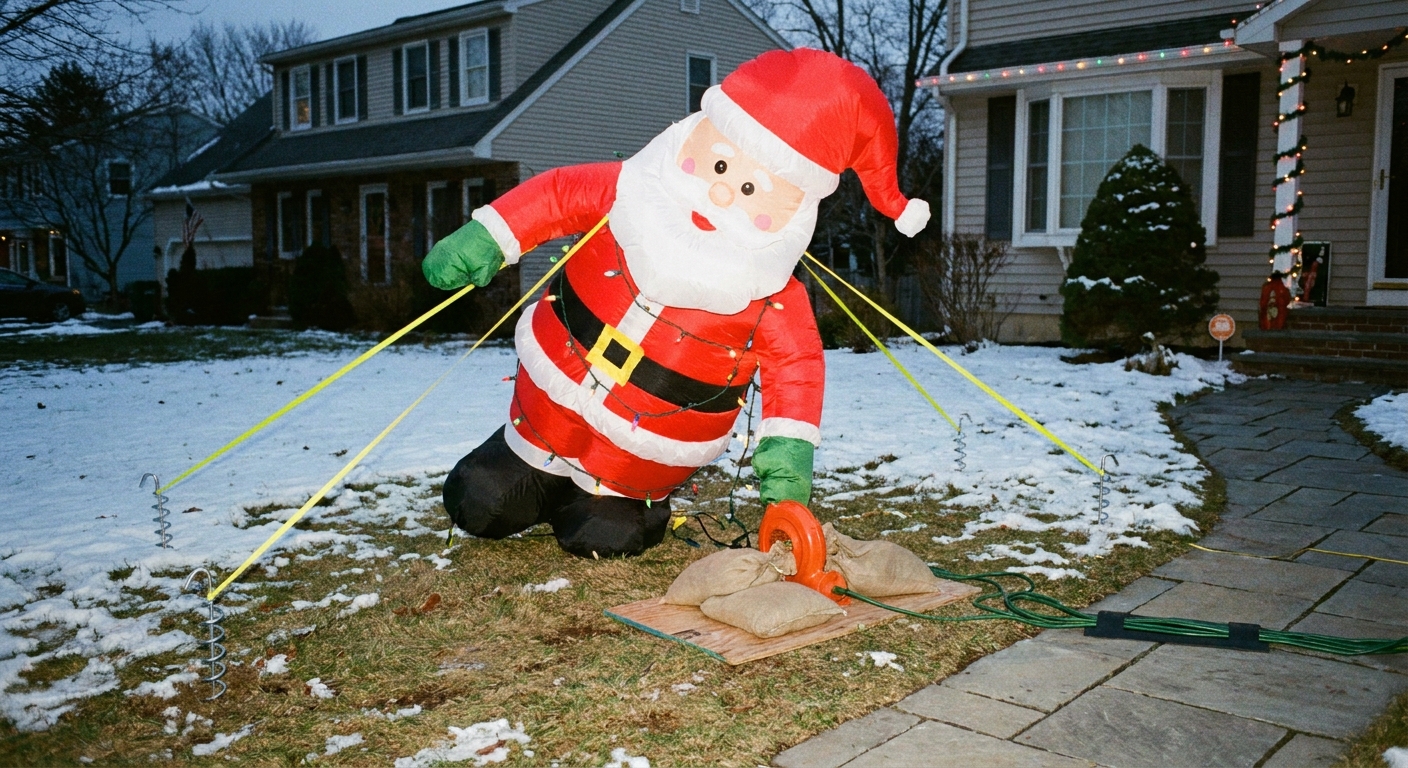
Inflatables act like sails, so they need multiple anchor points. A reliable setup looks like this:
- Use every built-in tie point on the inflatable. If it has four loops, use four lines.
- Angle guy lines outward in an X pattern, not straight down. Wider angles resist tipping.
- Choose a sturdy stake (spiral stakes are a favorite for soft or wet soil).
- Secure the base: Add a sandbag or a paver near the blower housing so the whole unit cannot slide.
- Shorten slack: Guy lines should be taut, but not stretched like a guitar string. Leave a little give so gusts do not create harsh shock loads.
Snow tip: After heavy snowfall, clear snow away from the base and air intake so the fan can breathe and the inflatable does not strain.
How to stabilize wire frames and lighted yard figures
These usually fail from wobble, not lift. Help them stand proud:
- Stake at multiple points: At least two per figure, more for tall pieces.
- Add a rear guy line: One discreet line to a stake behind the figure prevents forward tipping in gusts.
- Cross-brace pairs: If you have two similar pieces (like two deer), tie them together low on the frame so they support each other.
- Keep weight low: If adding pavers, attach them near the ground, not higher on the frame.
Porch decor: railings, steps, and door security
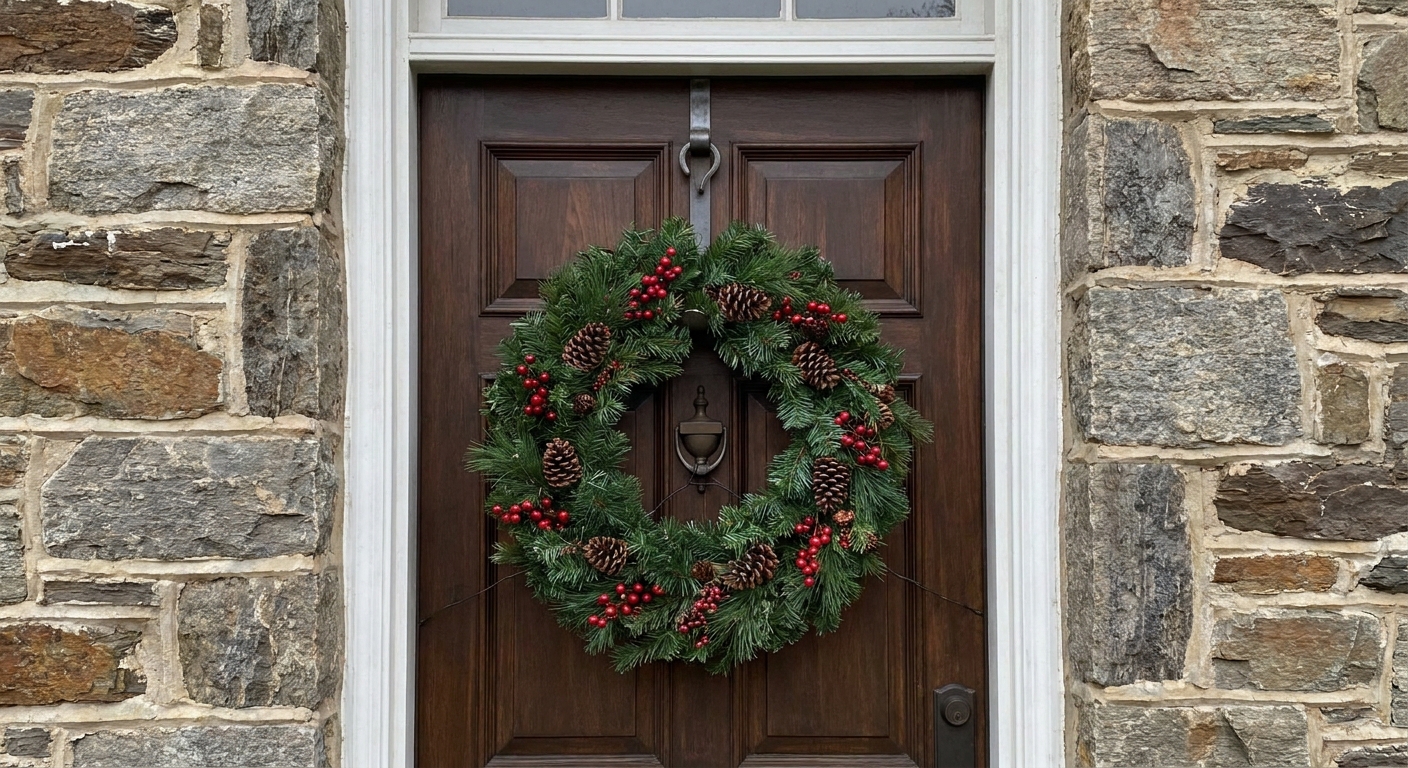
Wreaths and door swags
- Use a strong hanger sized for your door thickness.
- Stop the swing: Add a small, hidden tie at the bottom to keep it from banging in the wind.
- Mind moisture: If using fresh greens, avoid trapping wet foliage against painted surfaces.
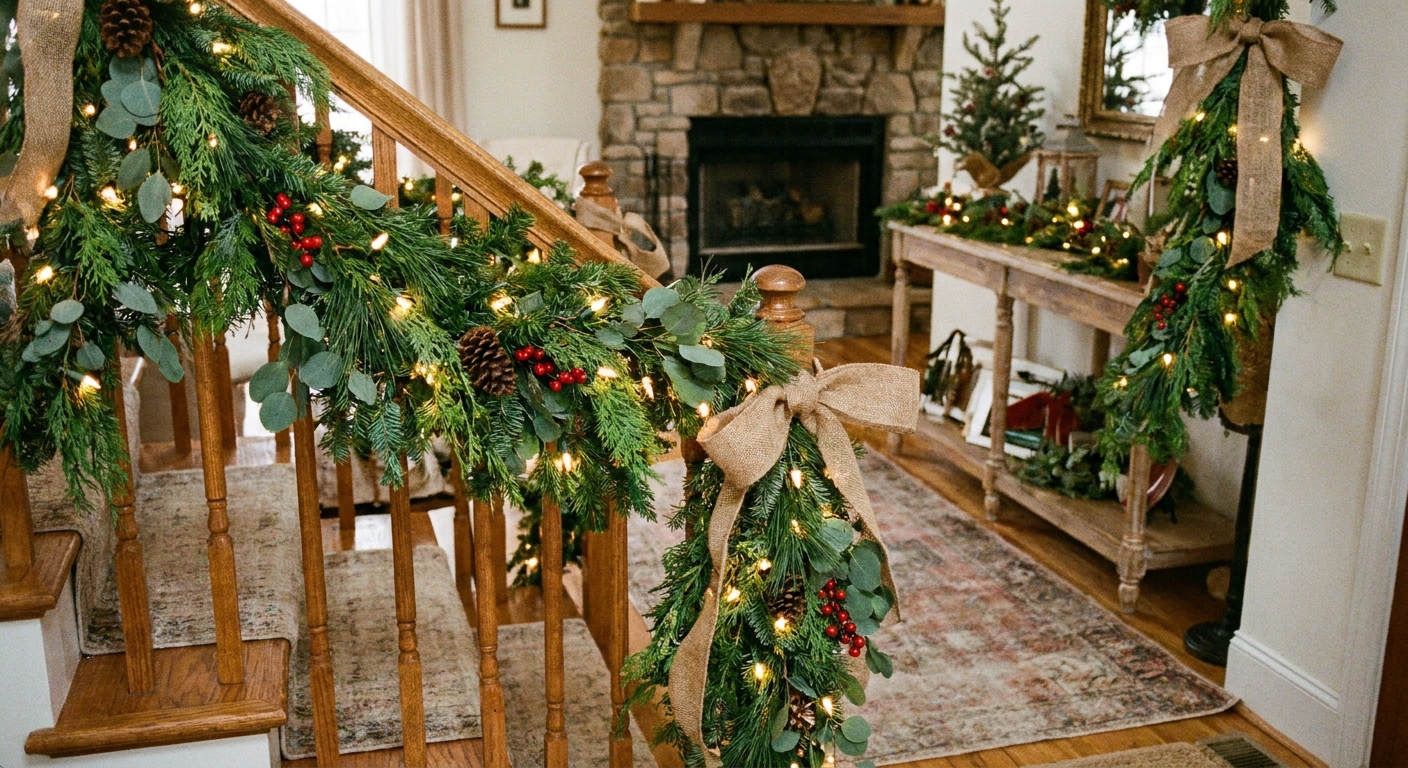
Garland on railings
- Anchor every 12 to 18 inches with outdoor zip ties or strong twine. Tie more often in very windy spots or with heavier garland.
- Secure the ends first, then work toward the middle so the garland does not creep.
- Add a safety tie at corners and newel posts, where wind tends to grab.
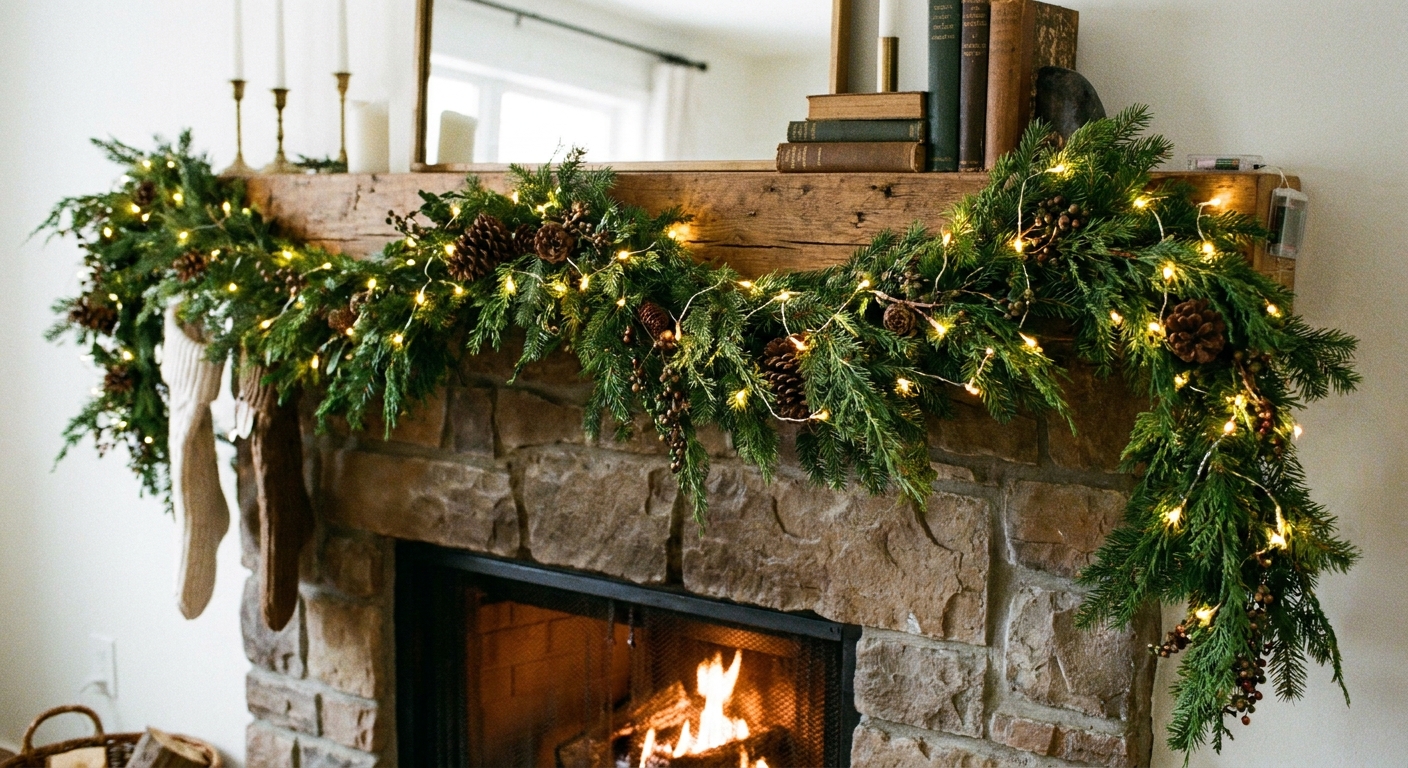
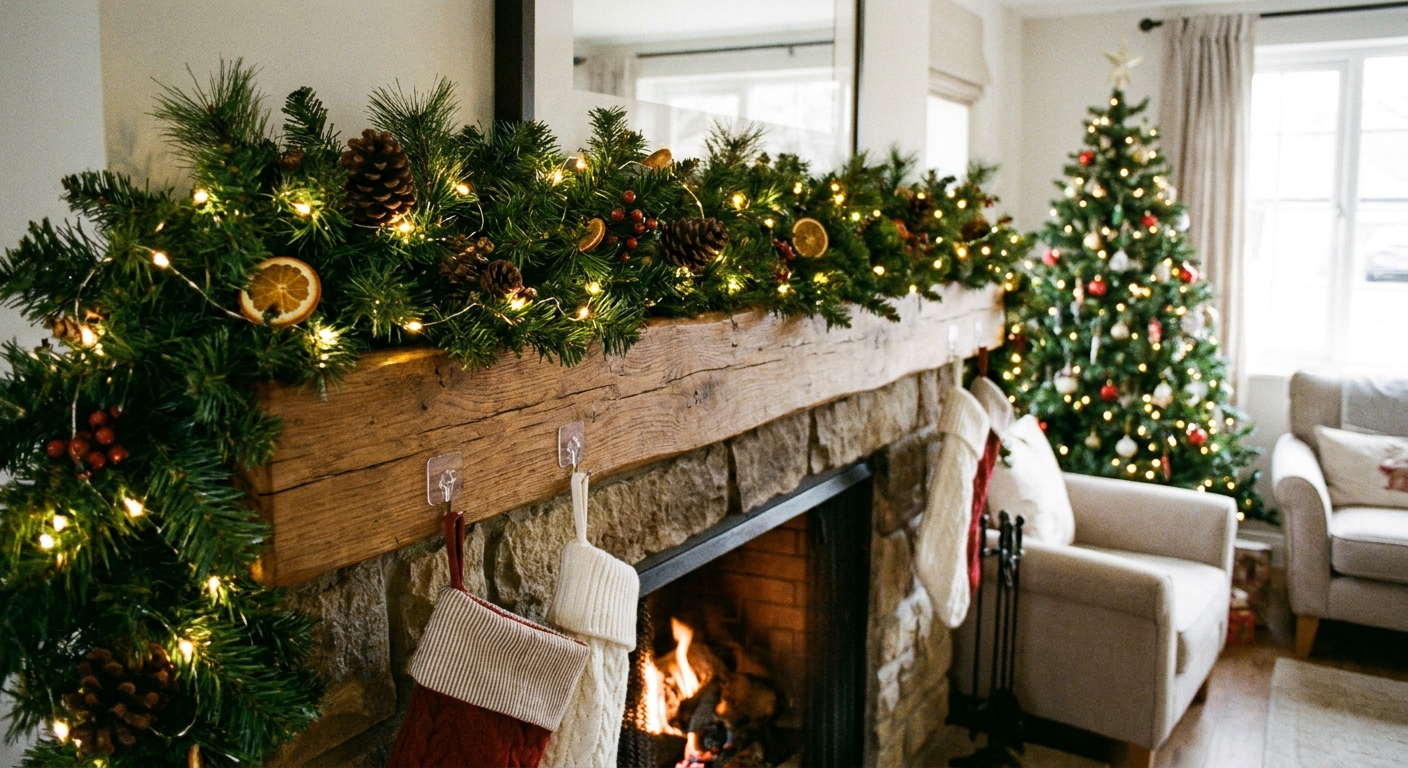
If you also decorate indoors, you may like these gentle, no-damage hanging techniques for mantels: Hang heavy garland on a mantel without nails.
Planters, lanterns, and porch props
- Weight the base: Gravel, stones, or sandbags inside the planter keep it grounded. Keep weight low.
- Bundle tall picks: Tie branches together near the base so they do not whip separately.
- Use non-slip pads: Under lanterns or decor on smooth concrete to prevent sliding.
Roofline and tree lights: keep them tidy
For wind, the main goal is to prevent flapping and tugging. A few tidy habits make a big difference:
- Clip at consistent spacing so sections cannot billow.
- Create strain relief: Leave a small service loop near plugs so the connection is not bearing tension.
- Keep connections off the ground where melting snow can puddle.
- Point plug ends downward when possible and as the manufacturer allows, so water sheds away from the connection.
Power safety note: Use outdoor-rated lights, outdoor-rated extension cords, and GFCI-protected outlets. Follow manufacturer instructions for load limits and placement, especially where snow and standing water can collect.
Protect cords and connections from snow and slush
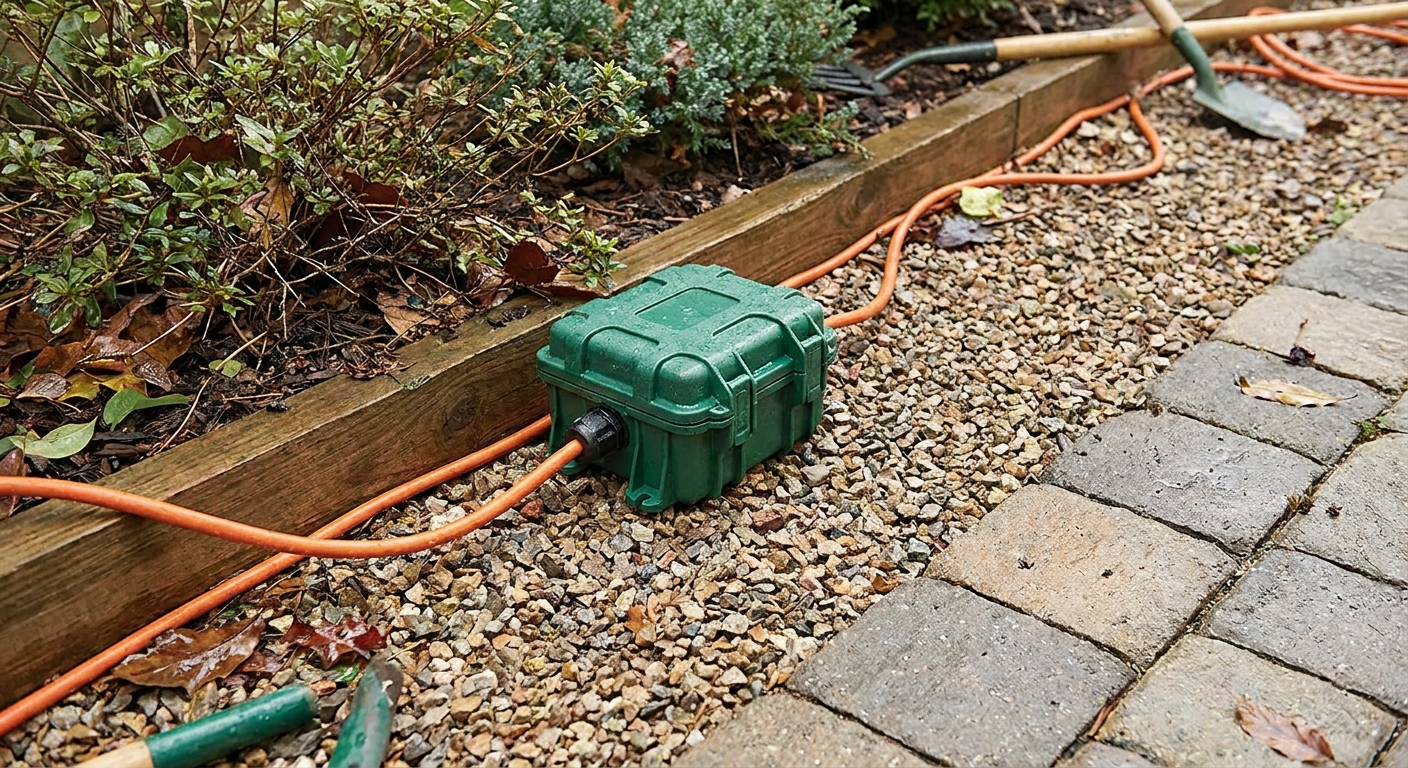
- Elevate connections by hanging them under an eave or along a railing with a strap, or using a purpose-made connection cover positioned out of foot traffic.
- Use weatherproof connection covers to shield plug junctions from direct precipitation.
- Route cords along edges of walkways, not across the center.
- Leave a drip loop so water runs down and away from the plug.
- Do not staple or pinch cords: Avoid anything that can nick insulation or compress the cord jacket.
If you love a clean look, this indoor tip can inspire that same tidy thinking outside: Hide battery packs and cords in Christmas decor.
Storm mode: a quick checklist
When a big gusty day is coming, a 10-minute walkaround can prevent broken decor and tangled lights.
- Deflate inflatables if strong winds are expected, especially if it's windy enough to sway small trees and branches. Bringing them in overnight is often kinder than fighting the forecast.
- Tighten lines and ties and replace anything cracked, brittle, or stretched.
- Remove lightweight accents like oversized bows, hanging ornaments on outdoor trees, or unsecured signs.
- Clear snow from supports so frames are not leaning under extra weight.
- Unplug before heavy ice if conditions are unsafe or if water is pooling near connections.
Troubleshooting: common problems
My inflatable keeps leaning
Add a second set of guy lines, widen the stake placement, and place a weight near the blower base to stop sliding.
My wire deer tips forward
Add a rear guy line to a stake behind it, and use at least two ground anchors at the feet.
My porch garland twists and droops
Tie the ends first, then add ties every 12 to 18 inches. Add extra ties at corners and around posts where wind grabs.
My light frames shift on ice
Switch from stakes to weights plus straps. A paver strapped tightly to the lowest part of the frame can help prevent skating. Add a cloth or rubber pad under straps if they cross a painted surface.
Keep it merry and safe
Outdoor Christmas decor is pure magic, but winter weather plays rough. Anchor down, stabilize side-to-side, and tidy cords like a little holiday helper who loves both sparkle and safety.
For more ideas that shine outdoors, visit Outdoor & Porch Decor.